Sustainable Cleaning Products Manufacturing: The Complete ESG Roadmap for Global Suppliers in 2026
Time : 2026-06-18
Sustainable Cleaning Products Manufacturing: The Complete ESG Roadmap for Global Suppliers in 2026

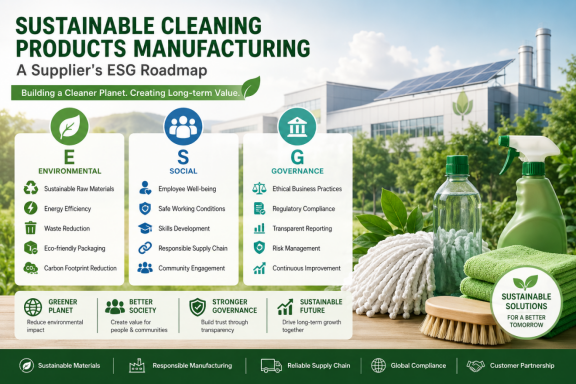
As sustainability becomes a core purchasing requirement worldwide, ESG (Environmental, Social, and Governance) performance is no longer optional for cleaning product manufacturers.
From hospitals and hotels to facility management companies and retail distributors, buyers increasingly evaluate suppliers based on their environmental impact, social responsibility, and governance standards.
This shift is transforming how cleaning products are designed, manufactured, packaged, and delivered.
In this guide, we’ll explain what ESG means for cleaning product suppliers and how manufacturers can build a sustainable business that meets future procurement requirements.
What Is ESG in Cleaning Products Manufacturing?
ESG stands for:
Environmental
How a company manages its impact on the environment.
Examples include:
Reducing carbon emissions
Using sustainable raw materials
Minimizing waste
Conserving water and energy
Social
How a company treats employees, suppliers, and communities.
Examples include:
Safe working conditions
Fair labor practices
Employee training
Responsible sourcing
Governance
How a company operates ethically and transparently.
Examples include:
Regulatory compliance
Supplier accountability
Business ethics
Data transparency
For cleaning product manufacturers, ESG has become a critical factor in winning contracts and maintaining long-term customer relationships.
Why ESG Matters More Than Ever in 2026
Global procurement standards are changing rapidly.
Large distributors and multinational companies increasingly require suppliers to demonstrate measurable sustainability initiatives.
Many procurement teams now include ESG assessments as part of supplier qualification processes.
Common requirements include:
Carbon footprint reporting
Sustainable packaging programs
Environmental certifications
Ethical sourcing policies
Supply chain transparency
Suppliers unable to provide this information may face challenges entering premium markets.
Environmental Sustainability: Building Greener Cleaning Products
1. Choose Sustainable Materials
The environmental impact of a cleaning product begins with its raw materials.
Leading manufacturers are investing in:
Recycled microfiber
Bamboo fiber
FSC-certified cellulose materials
Biodegradable nonwoven fabrics
Recyclable polypropylene materials
These alternatives help reduce dependence on virgin resources while maintaining product performance.
2. Reduce Manufacturing Waste
Manufacturing efficiency directly affects sustainability performance.
Best practices include:
Material utilization optimization
Fabric scrap recycling
Water recycling systems
Automated cutting technology
Lean manufacturing processes
Reducing waste not only lowers environmental impact but also improves production efficiency.
3. Improve Energy Efficiency
Energy consumption represents a significant portion of a factory’s carbon footprint.
Forward-thinking manufacturers are adopting:
Solar power systems
Energy-efficient machinery
LED lighting upgrades
Smart factory monitoring systems
These investments help reduce operational costs while supporting sustainability goals.
4. Optimize Packaging
Packaging is one of the most visible sustainability concerns for buyers.
Sustainable packaging solutions include:
Recyclable packaging materials
Reduced plastic content
Compression packaging technology
Paper-based packaging alternatives
For example, compressed microfiber mop pads can significantly reduce shipping volume, lowering transportation emissions.
Social Responsibility in Cleaning Products Manufacturing
Environmental initiatives alone are not enough.
Global buyers increasingly evaluate suppliers based on social responsibility performance.
Employee Safety
Manufacturers should provide:
Safe working environments
Protective equipment
Safety training programs
Continuous improvement systems
Workforce Development
Investing in employee skills creates long-term business value.
Examples include:
Technical training
Leadership development
Quality management education
Responsible Supply Chains
Leading suppliers conduct regular audits to ensure:
Fair labor practices
Ethical sourcing
Human rights compliance
Transparent supplier relationships
Governance: The Foundation of Sustainable Growth
Strong governance creates trust between suppliers and buyers.
Manufacturers should establish clear systems for:
Compliance Management
Including:
Product testing
Quality control
Regulatory compliance
Risk management
ESG Reporting
Buyers increasingly request:
Sustainability reports
Carbon reduction goals
Environmental metrics
Compliance documentation
Transparent reporting helps build credibility with procurement teams.
Certifications Buyers Look for in Sustainable Cleaning Products
Many global buyers use certifications as indicators of supplier reliability.
Common certifications include:
ISO 9001
Demonstrates a structured quality management system.
OEKO-TEX Standard 100
Confirms textiles are tested for harmful substances.
REACH Compliance
Ensures chemical safety requirements for European markets.
FSC Certification
Supports responsible forest resource management.
BSCI or Sedex Audits
Demonstrate social compliance and ethical business practices.
These certifications can significantly strengthen supplier competitiveness.
Future Trends in Sustainable Cleaning Products
Several emerging trends are reshaping the industry:
Recycled Material Adoption
Demand for products containing recycled content continues to increase.
Circular Economy Solutions
Products designed for recycling and resource recovery are becoming more attractive to buyers.
Carbon Reduction Programs
Many organizations are setting supplier carbon reduction targets.
ESG-Based Procurement
Procurement decisions increasingly include sustainability scoring alongside price and quality.
Manufacturers that adapt early will be better positioned for future growth.
Frequently Asked Questions (FAQ)
What are sustainable cleaning products?
Sustainable cleaning products are designed to reduce environmental impact through eco-friendly materials, efficient manufacturing processes, reduced waste, and recyclable packaging.
Why is ESG important for cleaning product suppliers?
ESG performance helps suppliers meet buyer requirements, improve brand reputation, reduce operational risks, and access premium markets.
Which certifications support sustainable cleaning products?
Common certifications include ISO 9001, OEKO-TEX Standard 100, REACH Compliance, FSC Certification, and social compliance audits such as BSCI or Sedex.
How can manufacturers reduce their environmental footprint?
Manufacturers can reduce environmental impact by using sustainable materials, improving energy efficiency, reducing waste, optimizing packaging, and implementing carbon reduction initiatives.
Conclusion
Sustainability is no longer a trend—it is becoming a global procurement standard.
For cleaning product manufacturers, ESG represents an opportunity to improve operational efficiency, strengthen customer relationships, and gain a competitive advantage in international markets.
Suppliers that invest in sustainable materials, responsible manufacturing practices, transparent governance, and continuous improvement will be best positioned to meet the expectations of modern buyers and achieve long-term growth.