 EN

How to Evaluate Dirt Pickup and Retention in Microfiber Disposable Mop Pads
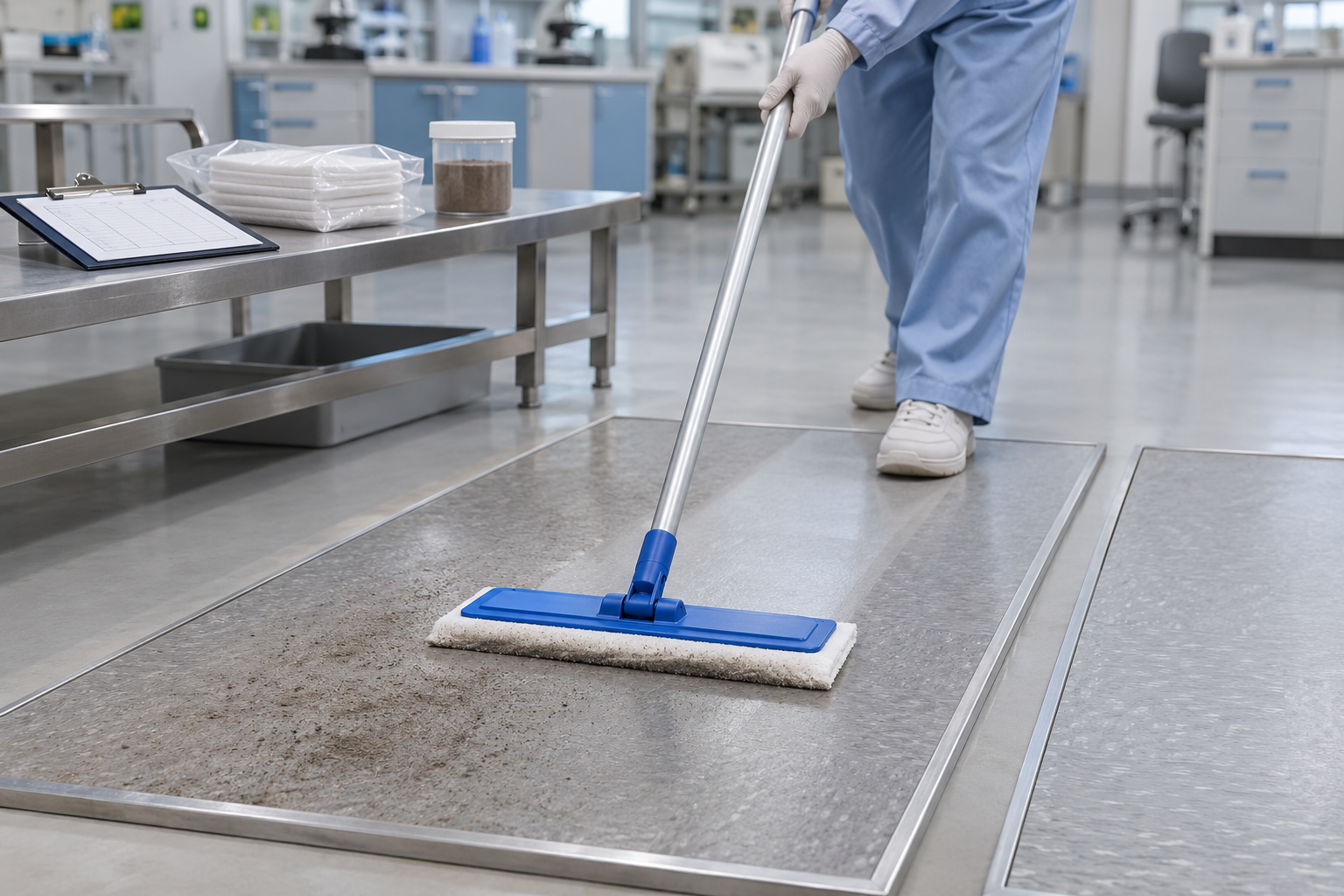
A disposable mop pad can look heavily soiled after cleaning while still leaving dirt on the floor. It may also remove contamination from one section and transfer some of it onto the next.
For hospital buyers, cleaning contractors and distributors, these are two separate performance questions: how much soil does the pad remove, and how well does it retain that soil during continued use?
To evaluate dirt pickup and retention in microfiber disposable mop pads, compare soil removal from a defined surface, measure transfer onto a separate clean surface, and repeat the assessment under controlled conditions. Use the intended flooring, cleaning solution, frame and preparation method wherever practical.
A photograph of a dirty pad or a single coverage figure cannot answer both questions.
Dirt Pickup and Retention: What Is the Difference?
Dirt pickup is the removal of soil from a surface during cleaning. It can be assessed by measuring the soil remaining after a defined number of passes.
Dirt retention describes how well the collected soil stays within the pad during subsequent movement. A useful practical indicator is the amount transferred onto a previously clean surface.
The distinction matters because a pad may perform well on the first soiled section but redistribute contamination as it becomes loaded.
A laboratory study of microfiber cleaning cloths evaluated both removal and recontamination. It found differences between products in the amount of organic debris and microorganisms transferred back to surfaces. The findings concern the tested cloths, rather than every disposable mop pad, but support assessing removal and transfer separately. pubmed.ncbi.nlm.nih.gov
1. Choose Soil That Represents the Application
The test soil should reflect what the product is expected to remove.
Fine dust, tracked-in grit, greasy marks and dried organic soil behave differently. A pad that performs well with loose particles may require additional mechanical action to remove an adhered deposit.
For a purchasing trial, select representative soil types and document how they are prepared. Specify the amount applied, distribution area and drying time.
Avoid using an unusually heavy or easy-to-remove soil simply to produce a dramatic demonstration. The purpose is to compare useful performance, not the appearance of the test.
Any microbiological challenge testing should be conducted by a suitably equipped laboratory. Routine buyer trials can use appropriate non-hazardous test soils.
2. Control the Floor Surface and Starting Conditions
Floor texture affects contact between the pad and the soil. Smooth vinyl and textured safety flooring may produce different results.
Use the same surface material and condition for each comparison. Clean and reset test sections between runs, and confirm that the starting soil load is comparable.
Also keep these factors consistent:
- Mop frame and handle.
- Pad preparation and liquid load.
- Cleaning solution and concentration.
- Stroke pattern, speed and number of passes.
- Applied pressure and test area.
Where possible, randomize the testing order. Otherwise, operator practice or changes in the test setup may favour the product tested later.
If products require different preparation methods, run a separate comparison following each supplier’s instructions. Clearly distinguish that system comparison from testing under identical conditions.
3. Measure What Remains on the Floor
Pad discoloration is a useful observation, but it is not a reliable measurement of cleaning efficiency.
A darker pad may have collected more dirt. It may also have been used on a more heavily soiled area, or its material may simply make contamination more visible.
Depending on the soil, assessment options include controlled image analysis, recovery and measurement of a tracer, or a suitable gravimetric method.
For a validated measurement approach:
Soil removal (%) = [(initial soil quantity − residual soil quantity) ÷ initial soil quantity] × 100
The initial and residual quantities must be measured on a comparable basis. Document sampling recovery, background contamination and detection limits where relevant.
Weighing a wet pad before and after cleaning is not enough to determine dirt pickup. Changes in water content can outweigh the mass of the collected soil.
4. Add a Separate Soil-Transfer Stage
After cleaning the soiled test section, move the same pad onto a separate, initially clean section without rinsing or replacing it.
Use a defined number of strokes, then assess the clean section for transferred material. Maintain the same pressure, movement and surface conditions between products.
This stage helps answer a practical question: does the pad continue carrying the collected soil, or does it deposit some of it elsewhere?
Include a clean-pad control to identify background contributions from the pad, solution or measurement process.
If reporting a transfer percentage, define its denominator. A percentage based on the original applied soil is different from one based on the amount estimated to have been collected.
This test is an evaluation tool. It does not justify moving used pads between patient rooms or overriding local replacement procedures.
5. Evaluate Performance as the Pad Becomes Loaded
A first-pass result describes a fresh pad. Buyers also need to understand what happens later in the assigned task.
Use a sequence of comparable soiled sections and examine removal and transfer at agreed intervals. Record changes in:
- Residual soil on the floor.
- Soil deposited on clean sections.
- Floor wetting and solution delivery.
- Drag and handling.
- Pad integrity and attachment.
Agree on stopping criteria before testing. These might include insufficient wetting, unacceptable residual soil, increased transfer or physical damage.
The resulting usable coverage is more informative than the largest area a pad can physically pass over.
6. Keep Dirt Removal Separate From Disinfection
Physical removal, microbial removal and microbial inactivation are different outcomes.
A disposable microfiber pad may remove soil through mechanical action. That does not establish that it kills microorganisms or achieves disinfection.
Where disinfectant is used during microbial testing, lower recovered counts may reflect both removal and chemical inactivation. A qualified laboratory should select controls and recovery methods that support the intended claim.
ATP readings also require care. CDC notes limitations including interference and the absence of a universal cleanliness threshold. Fluorescent markers can help assess cleaning coverage, but neither method independently establishes a mop pad’s dirt-retention capacity or disinfection efficacy. CDC
Use each measurement for the question it can reasonably answer.
7. Repeat the Trial and Review the Full Report
One pad and one test run provide limited evidence.
Use multiple specimens and repeated runs. For ongoing procurement, consider samples from more than one production batch.
Report variation as well as the average. Two products with similar mean removal may differ in consistency.
A useful supplier report should identify:
| Report item | Information buyers need |
|---|---|
| Sample | Product code, construction and batch |
| Soil and surface | Soil preparation, loading and flooring |
| Preparation | Solution, concentration and liquid load |
| Cleaning method | Frame, pressure, strokes and speed |
| Pickup result | Residual soil and calculation method |
| Transfer result | Clean-surface assessment and reporting basis |
| Reliability | Replicates, variation, controls and limitations |
Claims such as “excellent dirt trapping” become more useful when connected to these details.
Turn Trial Results Into Purchasing Requirements
The best-performing pad is the one that meets the intended task consistently within the approved workflow.
Compare pad consumption, preparation time, solution use and repeat cleaning alongside removal and transfer results. Higher initial pickup is not necessarily an advantage if the pad subsequently deposits more soil or becomes difficult to handle.
For ESUN OEM/ODM enquiries, buyers can provide the intended flooring, typical soil, cleaning chemicals and frame details. Agreeing on test conditions and acceptance criteria before sample approval creates a clearer basis for production and repeat orders.
Frequently Asked Questions
Does a dirtier-looking mop pad mean better cleaning?
No. Appearance alone cannot establish how much soil was removed or how much remains on the floor.
Is higher absorbency the same as better dirt retention?
No. Absorbency concerns liquid uptake. Dirt retention concerns keeping collected soil from being transferred during further use.
Can one test prove performance on every floor?
No. Results apply to the tested conditions. Different floor textures, soils and preparation methods may change performance.
Which result matters more: pickup or retention?
Both matter. Buyers should evaluate initial removal together with subsequent transfer and performance through the intended cleaning task.