 EN
EN

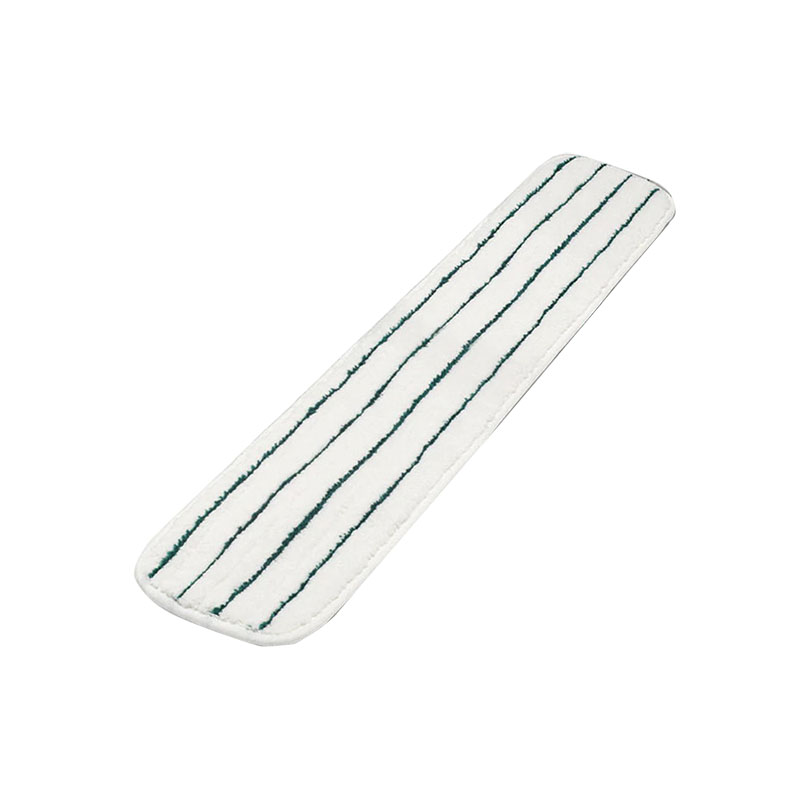
Sourcing Smart: How International Buyers Find Dependable Micro Fiber Mop Manufacturers in China
China produces the majority of the world's microfiber cleaning tools — from flat mops and spin mops to disposable systems and professional-grade dust mops. The challenge for international buyers is not finding a micro fiber mop supplier; it is identifying which manufacturers can deliver consistent quality, meet regulatory requirements for the destination market, and maintain reliable production through multi-year supply relationships.
Factory Verification Beyond the Website
Why Production Environment Reveals More Than Product Samples
Every supplier sends their best samples. The production environment reveals capability that samples conceal. A micro fiber mop manufacturer operating a climate-controlled textile production floor — with documented temperature and humidity logs — demonstrates awareness that microfiber yarns absorb ambient moisture, affecting fiber diameter consistency, electrostatic properties, and final product performance. Facilities lacking environmental controls in weaving or knitting areas may deliver passing samples while struggling with batch-to-batch consistency in full production.
The production floor footprint matters for delivery reliability. A facility with 8,000 square meters of dedicated production space — such as Zhejiang Esun Environmental Technology's manufacturing plant — supports parallel production lines that prevent single-line bottlenecks. When one line undergoes maintenance or material changeover, other lines maintain output. Facilities under 2,000 square meters typically run a single production line, making delivery schedules vulnerable to any disruption.
Certification Verification and Audit Readiness
ISO 9001 certification establishes a quality management framework, but the certification's value depends on the certifying body's credibility. Buyers should verify certification through the issuing body's public database rather than accepting certificate copies at face value. BSCI (Business Social Compliance Initiative) certification adds social-compliance assurance — a growing requirement for European retail and institutional buyers whose procurement policies mandate ethical supply chains.
ESUN holds both ISO 9001 and BSCI certifications, with all products supported by TDS (Technical Data Sheet) documentation from their 500-square-meter R&D center — giving buyers technical specifications for fiber composition, GSM (grams per square meter), absorbency rates, and durability testing results before committing to production orders.
Quality Parameters That Differentiate Micro Fiber Mop Suppliers
Fiber Composition and Split-Fiber Technology
Microfiber cleaning performance depends on fiber splitting — the process of separating bicomponent polyester-polyamide fibers into wedge-shaped filaments with microscopic channels that trap particles and absorb liquids. Properly split microfiber contains 70–80% polyester and 20–30% polyamide, with individual filament thickness of 0.1–0.3 denier — roughly 1/100th the diameter of a human hair.
Split quality is invisible in finished-product appearance but directly governs cleaning performance. A micro fiber mop using inadequately split fiber appears identical in photographs but delivers 30–50% less particle capture and liquid absorption. Buyers without access to electron microscopy for split verification should request independent third-party testing of absorbency rate (seconds to saturation), absorbency capacity (grams of water per gram of fiber), and particle removal efficiency from the supplier's TDS documentation.
GSM and Density: The Weight-Performance Relationship
Microfiber mop pads range from 200 GSM (light-duty dust mopping) to 500+ GSM (heavy-duty floor scrubbing with disinfectant solutions). Higher GSM translates directly to greater liquid capacity and particle-holding volume but also increases drying time and laundry throughput for reusable pads. The specification should match the intended application — 300–380 GSM suits general commercial cleaning; 400+ GSM suits healthcare and food-processing environments where disinfectant saturation is critical.
Real-World Procurement Experience
A European cleaning-products distributor seeking a micro fiber mop OEM partner evaluated six Chinese manufacturers through sample orders, factory audits, and trial production runs. Three suppliers delivered passing initial samples but failed to maintain fiber-split consistency across the trial production run of 2,000 units — the split quality degradation was only detectable through absorbency testing, not visual inspection. The distributor selected ESUN, whose TDS-backed quality documentation and 120+ product portfolio demonstrated the technical depth to handle custom specifications including GSM adjustments, color matching, and branded packaging. Two years into the partnership, the distributor has expanded from an initial three SKUs to eleven, with consistent quality across all production batches.
Frequently Asked Questions
What MOQ should buyers expect from China micro fiber mop manufacturers?
Standard MOQs range from 500–1,000 pieces per SKU for stock designs and 2,000–5,000 pieces for custom specifications requiring dedicated production setup. ESUN accommodates OEM and ODM orders with flexible MOQ negotiation based on product complexity and long-term partnership potential.
How can buyers verify microfiber split quality without lab equipment?
Request the supplier's TDS documentation showing absorbency rate and capacity test results. A simple field test: place a drop of water on the mop pad surface. Properly split microfiber absorbs the droplet within 1–2 seconds. Water beading on the surface indicates inadequate splitting or fiber contamination from manufacturing residues.
What is the typical lead time for custom micro fiber mop orders?
Standard OEM production lead times run 25–35 days from artwork approval for first-time orders, with repeat orders shipping in 15–25 days. Custom fiber blends, non-standard GSM specifications, or specialized packaging extend lead times by 7–14 days for material procurement and production setup.
What certifications should buyers prioritize for EU market import?
CE marking applies primarily to machinery rather than textile cleaning products. Prioritize REACH compliance documentation (EC 1907/2006) confirming no restricted substances in fiber or dye chemistry, and OEKO-TEX Standard 100 certification if marketing to consumer retail channels. BSCI certification addresses social-compliance requirements increasingly demanded by European procurement policies.
Can manufacturers produce micro fiber mops with antibacterial treatment?
Yes — silver-ion or quaternary-ammonium antimicrobial treatments can be applied to microfiber during finishing. ESUN offers antibacterial microfiber cloths and mop pads with documented efficacy against common pathogens per ISO 20743 testing standards. Specify antimicrobial treatment requirements during the RFQ stage.
How should buyers structure quality-control inspections for mop orders?
Implement pre-production inspection (raw material verification), during-production inspection (random sampling from active production lines), and pre-shipment inspection per AQL 2.5 sampling plans. For first orders, include a production sample approval step requiring the manufacturer to ship 5–10 production samples for buyer approval before completing the full production run.