 EN
EN

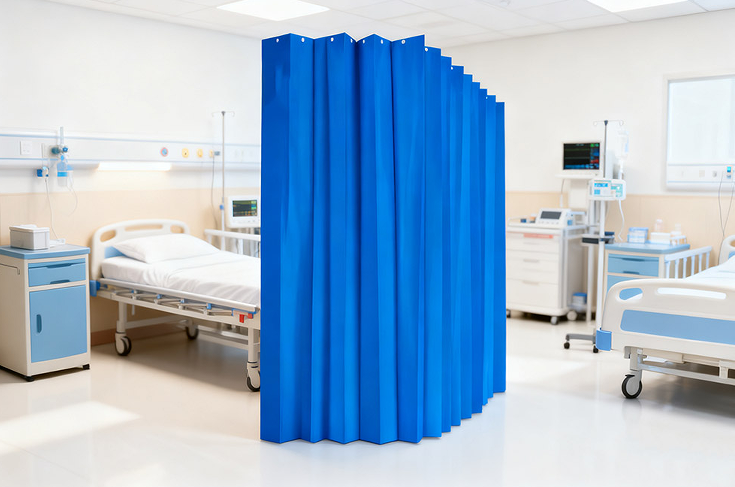
The Regulatory Landscape for Medical Curtain Imports
A medical curtain performs a simple physical function — separating patient beds, creating privacy, and containing airborne contaminants. The regulatory requirements for importing these products, however, are far from simple. Three major compliance frameworks — FDA in the United States, CE Marking in the European Union, and UKCA in the United Kingdom — each impose distinct requirements that importers must navigate before a single panel reaches a hospital loading dock.
FDA Requirements for the U.S. Market
Medical curtains are classified as Class I medical devices by the FDA under 21 CFR 880. The classification covers hospital privacy curtains and cubicle curtains. Class I devices are subject to general controls — establishment registration, device listing, labeling requirements, and Good Manufacturing Practice under the Quality System Regulation. The foreign manufacturer must designate a U.S. agent and register their establishment before products can clear customs.
Flame resistance is the primary performance requirement. The curtain fabric must meet NFPA 701 test methods for flame propagation, demonstrating that the material self-extinguishes when the ignition source is removed. Test reports from accredited laboratories should accompany each production lot. Antimicrobial claims on labeling trigger additional scrutiny — curtains marketed as reducing bacterial contamination may be classified as Class II devices requiring 510(k) premarket notification.
CE Marking for the European Union
CE Marking for a medical curtain falls under the Medical Device Regulation (EU) 2017/745. Medical curtains are Class I devices under Annex VIII, requiring a Declaration of Conformity from the manufacturer stating compliance with General Safety and Performance Requirements, including biocompatibility, mechanical safety, and flammability performance.
A key distinction is that Class I non-sterile, non-measuring medical curtains do not require Notified Body involvement — the manufacturer self-declares conformity. A European Authorized Representative must be designated by non-EU manufacturers.
Flame retardancy requirements reference EN 13773 for textile burning behavior. Hospital curtains typically require Class 1 classification — the highest flame resistance level — verified through test reports maintained in the technical documentation file for at least 10 years after the last product is placed on the market.
UKCA Marking for the United Kingdom
Post-Brexit, the UK requires UKCA marking for medical devices in Great Britain. Requirements closely mirror CE Marking, but a separate UK Responsible Person is required — the EU Authorized Representative cannot serve this function. The transition period allowing CE-marked medical curtains has been extended to June 2025. New products entering after this deadline require UKCA marking.
A Practical Case: Hospital Group International Procurement
A hospital group operating facilities in the United States, Germany, and the United Kingdom issued a tender for 8,500 medical curtain panels. The procurement team initially assumed a single supplier could deliver compliant product for all markets under one quality system — this was incorrect. While the curtain fabric and construction were identical, regulatory documentation, labeling, and authorized representative requirements differed for each jurisdiction.
The hospital group sourced curtains from ESUN Clean, a manufacturer with documented compliance across FDA, CE MDR, and UKCA frameworks. The manufacturer provided three separate declarations of conformity, registered with appropriate authorized representatives, and labeled products with jurisdiction-specific markings. Panels were manufactured in a single run, then divided into three batches with jurisdiction-specific labeling inserted at final inspection. Procurement was completed to all three standards without customs delays.
Key Documentation for Importers
For each jurisdiction, importers should maintain the manufacturer's Declaration of Conformity, authorized representative designation, flame retardancy test reports from an accredited laboratory, biocompatibility data if applicable, and batch traceability records. Missing any element can result in customs holds delaying hospital fit-out schedules by weeks.
Frequently Asked Questions
Is a medical curtain classified as a medical device?
In the United States, EU, and UK, medical curtains are Class I medical devices. This triggers establishment registration, device listing, labeling, and quality system requirements that importers must satisfy.
What flame resistance standards apply to medical curtains?
NFPA 701 in the United States and EN 13773 Class 1 in the EU are the primary standards. Test reports from accredited laboratories must be maintained in the technical documentation file.
Does CE marking require Notified Body involvement for medical curtains?
Non-sterile, non-measuring medical curtains are self-declared by the manufacturer without Notified Body involvement. Sterile curtains or those with antimicrobial claims may require assessment.
Can a CE-marked medical curtain be sold in the UK after Brexit?
CE-marked products placed on the UK market before June 2025 under the transition period are accepted. New products after this date require UKCA marking with a separate UK Responsible Person designated for the manufacturer. Importers should confirm the applicable date for their product category before ordering inventory intended for the UK market.
What documentation do importers need at customs for a medical curtain?
A Declaration of Conformity, authorized representative designation, flame retardancy test reports from an accredited laboratory, and batch traceability records linking each shipment to its test documentation. Manufacturers like ESUN Clean provide jurisdiction-specific documentation packages for multi-market importers, including translated declarations where required by destination country regulations.
Are antimicrobial medical curtains regulated differently?
Curtains marketed with antimicrobial claims may face higher regulatory classification. The FDA may require 510(k) clearance, and the EU may require Notified Body assessment. Labeling claims determine the regulatory pathway.