 EN
EN

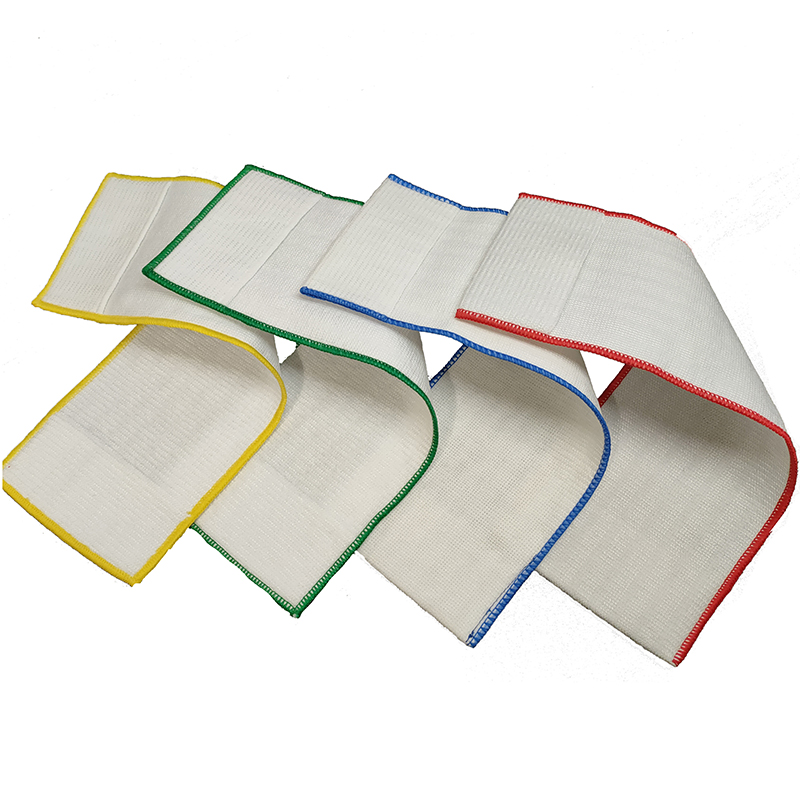
Pad Economics: How Disposable Mop Pad Strategies Streamline Facility Cleaning Budgets
Disposable mop pads carry a higher per-unit cost than reusable alternatives — a fact that dominates procurement conversations. What that surface-level comparison misses is the full cost picture: laundry equipment depreciation, water heating, detergent, labor for pad collection and redistribution, and the contamination risk that reusable pads carry between facility zones. For facilities that measure total cost per clean square meter rather than cost per pad, disposable mop pad strategies frequently emerge as the lower-cost option.
Total Cost Analysis: Disposable vs. Reusable
The Hidden Costs Reusable Pads Add to Cleaning Operations
A reusable microfiber flat mop pad costing 3.50 that lasts 200 laundry cycles appears to cost 0.0175 per use — dramatically cheaper than a $0.25 disposable mop pad. The calculation ignores everything that happens between uses: the pad must be collected from the cleaning cart, transported to the laundry, sorted by contamination level (healthcare facilities cannot comingle soiled pads from general areas with those from isolation rooms), washed at 60–90°C with detergent and disinfectant chemistry, dried at controlled temperatures to prevent fiber damage, folded, and redistributed to cleaning stations.
A 200-bed hospital running in-house microfiber laundry for cleaning textiles typically spends 0.15–0.22 per pad per cycle on utilities, chemistry, and allocated labor — bringing the true per-use cost of the reusable pad to 0.17–0.24, closely approaching the disposable alternative. Add laundry-equipment depreciation, maintenance, and dedicated square footage, and the economic advantage of reusable pads narrows or disappears.
Disposable mop pads eliminate the entire downstream logistics chain — no collection, no transport, no washing, no redistribution. Labor savings of 4–7 minutes per pad across the full laundry cycle offset a significant portion of the per-unit cost differential for facilities with labor rates above $15 per hour.
Infection Control Cost Avoidance
The financial argument for disposable mop pads strengthens further in healthcare and food-processing environments where cross-contamination carries measurable cost consequences. A single healthcare-associated infection (HAI) attributable to environmental contamination costs facilities $15,000–35,000 in extended treatment, isolation protocols, and regulatory penalties. Disposable mop pads used as single-room, single-use items eliminate the reusable-pad pathway that can transfer pathogens between patient areas — a risk reduction whose economic value dwarfs the per-pad material cost.
Strategic Deployment for Maximum Cost Efficiency
Zone-Based Product Specification
Not every square meter of a facility requires the same mop pad specification. A zone-based approach assigns premium disposable mop pads — higher GSM, pre-saturated with disinfectant chemistry, ISO Class 5-compatible — to critical zones (operating rooms, isolation units, aseptic processing areas) while deploying standard disposable pads to general zones (corridors, administrative areas, warehouse floors). This tiered specification reduces average per-pad cost while maintaining the contamination-control benefits where they matter most.
ESUN, manufacturing disposable mop pads across multiple GSM grades and substrate types in their ISO 9001 certified facility, supports zone-based specification by maintaining consistent quality across their product tiers — facilities can deploy different pad grades through a single supplier relationship with unified documentation and lot traceability.
Waste-Stream Optimization
Disposable mop pad waste volume can be reduced through pad-size optimization — specifying the smallest pad dimensions that cover the intended floor area within the changeout interval. Standard commercial disposable pads range from 30×13cm (dust mopping) to 60×15cm (wet mopping) to 110×24cm (large-area coverage). A cleaning operation that currently uses 60cm pads across all areas may reduce waste 25–30% by switching to 40cm pads for smaller rooms and confined spaces.
Real-World Facility Implementation
A contract cleaning company servicing pharmaceutical manufacturing facilities across three sites switched from reusable microfiber flat-mop systems to disposable mop pad protocols for ISO Class 7 and Class 8 cleanroom accounts. The reusable system required validated laundry processes with documented wash temperatures, detergent lot tracking, and post-laundry bioburden testing — compliance activities costing roughly $3,200 monthly. After transitioning to ESUN's lot-traceable cleanroom-grade disposable pads, laundry compliance overhead was eliminated. Annual cleaning costs decreased 11% despite the higher per-unit pad cost — savings from eliminating laundry labor, utilities, validation testing, and clean-laundry storage space.
Frequently Asked Questions
How much do disposable mop pads cost compared to reusable pads?
Standard disposable mop pads cost 0.15–0.35 per unit at commercial volumes versus 2.50–5.00 per reusable pad. However, reusable pads incur 0.15–0.25 per use in laundry costs, narrowing the per-use differential to roughly 0.05–0.15 per application. ESUN's volume pricing for annual contract customers further reduces the per-unit cost of disposable pads.
Can disposable mop pads be used with any flat mop frame?
Most disposable mop pads use hook-and-loop (Velcro-style) or clip-grip attachment systems compatible with standard commercial flat mop frames. Verify frame dimensions — the most common sizes are 40cm and 60cm frames. ESUN produces disposable pads in both attachment styles.
What GSM is appropriate for disposable mop pads in healthcare settings?
For healthcare floor disinfection, 60–80 GSM disposable mop pads provide sufficient liquid capacity to hold disinfectant solution across a standard patient-room floor area. Lower GSM (40–55) suits light dust-mopping; higher GSM (90–120) supports heavy-duty scrubbing with extended contact time for sporicidal disinfectants.
Are disposable mop pads environmentally sustainable?
Disposable mop pads reduce water consumption, chemical discharge, and energy use compared to reusable-pad laundering — environmental benefits that partially offset the landfill impact. Biodegradable non-woven substrate options are available for facilities with composting waste streams. The net environmental comparison depends on local waste-management infrastructure and laundry energy sources.
How should used disposable mop pads be disposed of in healthcare settings?
Used disposable mop pads from general patient areas can be disposed of as general medical waste. Pads used in isolation rooms or with chemotherapeutic agents must follow the facility's hazardous or regulated medical waste protocol. Always segregate at the point of use according to the zone's designated waste stream.
What testing should buyers request for cleanroom-grade disposable pads?
Request particle-shedding test data per IEST-RP-CC004.3, bioburden certification, and lot-specific traceability documentation. ESUN provides TDS reports for cleanroom-grade disposable mop pads documenting fiber composition, particle-count performance, and sterilization compatibility (gamma, EtO, or autoclave as applicable).