 EN
EN

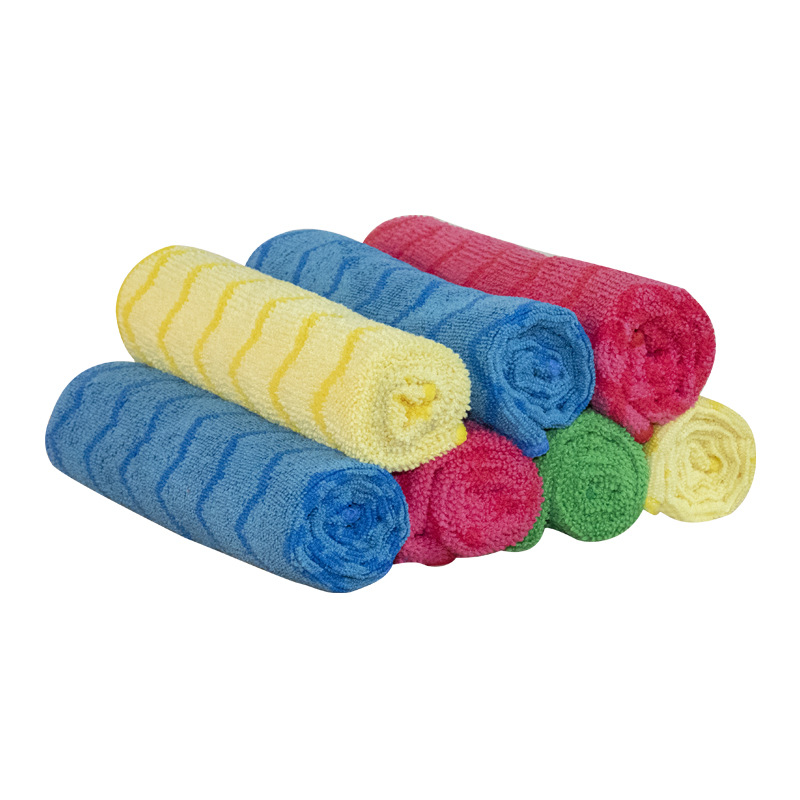
The Weave That Works: A Wholesale Buyer’s Guide to Waffle Weave Microfiber Towels
Waffle weave microfiber towels occupy a distinct position between plush terry towels (maximum absorbency, slower drying) and flat-weave glass cloths (lint-free, lower capacity). The waffle pattern — a three-dimensional grid of recessed pockets — creates a high surface-area structure that traps liquid and debris within the pockets while the raised weave ridges make initial contact with surfaces for effective wiping. For wholesale buyers, understanding how GSM, fiber blend, edge finishing, and size affect performance prevents costly specification mistakes.
Waffle Weave Construction and Performance Physics
How Pocket Geometry Determines Absorbency and Release
Each waffle pocket functions as a micro-reservoir. When the towel passes over a wet surface, capillary action draws liquid into the recessed pockets, where surface tension holds it until the towel is wrung or compressed. The depth and density of the waffle pattern — controlled by the weaving loom's programming — determines the absorbency-to-release ratio. Deeper pockets (typically 0.5–1.0mm depth) hold more liquid but require more wringing force to release; shallower pockets release liquid more easily but saturate faster.
This absorb-and-release characteristic makes waffle weave microfiber towels particularly effective for applications where the towel must capture liquid, then release it during wringing, then immediately capture more — a cycle that repeats dozens of times in professional cleaning, automotive detailing, and janitorial workflows. Plush terry towels, by contrast, trap liquid more tenaciously within their dense pile and require longer drying time between uses.
The polyester-polyamide blend ratio directly affects the waffle weave's performance. Polyester (typically 70–80%) provides structural integrity, fiber stiffness for the weave pattern to hold its shape, and durability through laundering. Polyamide (20–30%) provides the hydrophilic characteristic that drives water absorption — the amide groups in polyamide molecular chains form hydrogen bonds with water molecules, pulling moisture into the fiber structure. Blends below 20% polyamide sacrifice absorbency; blends above 30% reduce durability because polyamide fibers degrade faster under commercial laundry conditions.
GSM Ranges and Application Matching
Waffle weave microfiber towels for wholesale typically range from 200 GSM to 400 GSM. The 200–250 GSM range suits glass cleaning, stainless steel polishing, and light-duty surface wiping — applications where lint-free performance matters more than liquid capacity. The 300–350 GSM range provides the best general-purpose balance for professional cleaning, with sufficient liquid capacity for damp wiping of counters, equipment, and fixtures. Towels at 380–400 GSM deliver maximum absorbency for spill control, floor drying, and automotive drying applications.
GSM above 400 in waffle weave becomes counterproductive — the dense weave loses the open-pocket structure that defines waffle performance, behaving more like a heavy flat-weave cloth with reduced wringing efficiency. ESUN's waffle weave product line, manufactured in their ISO 9001 certified 8,000-square-meter facility, covers the full 200–400 GSM range with documented absorbency specifications for each variant.
Wholesale Specification Decisions
Edge Finishing: Overlock vs. Ultrasonic vs. Hot-Cut
Edge finishing affects both towel durability and lint-shedding characteristics. Overlocked (serged) edges use polyester thread wrapped around the towel perimeter — the most durable edge treatment for towels undergoing frequent commercial laundering but the finish that generates the most edge lint over time. Ultrasonic-cut edges use high-frequency vibration to fuse the fabric edge, creating a clean, low-lint finish that suits cleanroom, healthcare, and electronics manufacturing applications. Hot-cut edges — melted by heated blades — provide an economical finish for disposable or limited-use towel applications.
Wholesale buyers should specify edge finishing based on the end-user's laundering practices. Overlocked edges withstand 200+ commercial laundry cycles. Ultrasonic edges typically survive 100–150 cycles before edge fraying begins. Hot-cut edges are not designed for repeated laundering.
Real-World Wholesale Sourcing
A commercial cleaning supply distributor in Australia evaluated three waffle weave microfiber towel suppliers for their professional janitorial catalog — comparing GSM consistency, edge-finish durability through 50-cycle laundering simulations, and colorfastness. Two suppliers showed ±5% GSM variation across production lots; one maintained ±2% variation. The tighter-tolerance supplier — ESUN, with in-house TDS testing and a dedicated R&D center — won the contract despite slightly higher per-unit pricing because the distributor's institutional clients (hospital networks and university facilities departments) penalize specification drift through formal supplier scorecards. The contract expanded from an initial 50,000 units annually to over 200,000 units across three GSM variants within 18 months.
Frequently Asked Questions
What GSM waffle weave towel works best for general commercial cleaning?
The 300–350 GSM range provides the best balance of liquid capacity, wringing efficiency, and drying speed for general commercial cleaning. ESUN's 320 GSM waffle weave microfiber towel is their most popular wholesale SKU for professional cleaning distributors serving the janitorial and facility-management markets.
How do waffle weave towels compare to terry towels for glass cleaning?
Waffle weave towels leave less lint on glass surfaces because their flat raised ridges make contact without the dense fiber pile that generates lint in terry constructions. For streak-free glass and mirror cleaning, 200–280 GSM waffle weave towels with ultrasonic-cut edges provide the cleanest finish.
What is the typical wholesale price range for waffle weave microfiber towels?
Wholesale pricing for standard 40×40cm waffle weave microfiber towels ranges from 0.25–0.55 per unit at 10,000+ unit quantities, varying primarily by GSM (higher GSM costs more), edge finishing method, and custom branding requirements. Private-label packaging with custom artwork adds 0.03–0.08 per unit.
How many commercial laundry cycles can waffle weave towels withstand?
Overlock-edged waffle weave towels typically withstand 200–300 commercial laundry cycles before fiber degradation affects performance. Ultrasonic-edged towels last 100–200 cycles. Laundering temperature and detergent chemistry significantly influence lifespan — chlorine bleach and high-pH detergents accelerate polyamide fiber degradation.
Can waffle weave towels be custom-colored for brand matching?
Yes — dye-sublimation or yarn-dyeing processes achieve custom color matching. Minimum order quantities for custom colors range from 3,000–5,000 pieces per color. ESUN's OEM capabilities include Pantone-matched color production for wholesale buyers developing house-brand cleaning product lines.
What size waffle weave towel is standard for commercial cleaning?
The 40×40cm (16×16 inch) format is the most common professional cleaning size. Automotive drying applications use larger formats — 60×90cm or 70×140cm. Custom sizes are available for OEM orders with tooling adjustments for non-standard dimensions, typically adding 7–10 days to lead time.