 EN
EN

How to Optimize Cleaning with a Microfiber Scrub Mop
A hospital environmental services manager was frustrated. Despite using hospital-grade disinfectants and following strict cleaning protocols, ATP swab tests in patient rooms kept showing elevated readings. The problem wasn't the disinfectant—it was the tool. Traditional string mops were pushing soil around rather than removing it, and they were leaving behind biofilm that protected bacteria from chemical attack.
The switch to a microfiber scrub mop changed everything. Within two weeks, ATP readings dropped by 94% across all units. The cleaning team was spending less time scrubbing and achieving better results. The difference came down to understanding how a microfiber scrub mop works—and how to optimize its use.
What Makes a Microfiber Scrub Mop Different
A microfiber scrub mop is not a traditional mop with a different head. It is a fundamentally different cleaning tool. The microfiber material—typically a blend of 80% polyester and 20% polyamide—uses split-fiber technology that creates millions of microscopic hooks and channels per square inch.
These structures do two things that traditional mops cannot. First, they physically lift and trap dirt, bacteria, and contaminants rather than pushing them across the surface. Second, the channels create capillary action that pulls liquid and soil into the mop head, removing it from the surface entirely.
A microfiber scrub mop goes a step further with raised scrubbing fibers. These specialized fibers provide mechanical agitation that breaks up stubborn soils, hardened biofilms, and disinfectant residues without damaging the surface. Lab tests show that a microfiber scrub mop removes 99.9% or more of tested viruses and bacteria with just water.
Optimizing Wet vs. Damp Cleaning
The biggest mistake made with a microfiber scrub mop is using too much water. A microfiber scrub mop is designed to release solution efficiently—over 94% solution release on disposable versions—which means less liquid is needed to achieve effective cleaning.
For daily floor cleaning, damp mopping is more effective than wet mopping. The mop should be damp enough to pick up soil but not so wet that it leaves puddles. Excess water leaves behind residue, extends drying time, and can damage certain floor surfaces.
For deep cleaning or disinfecting, a wetter application is appropriate. The microfiber scrub mop should be saturated with the cleaning solution and wrung out to a controlled dampness. The raised scrubbing fibers work best when there is enough liquid to suspend soil but not so much that the mop head becomes waterlogged.
The Color-Coded System – Preventing Cross-Contamination
One of the most overlooked optimization tools for a microfiber scrub mop is the color-coding system. Many facilities use the same mop across different areas, effectively spreading contaminants from restrooms to patient rooms to food preparation areas.
A microfiber scrub mop with color-coded options allows cleaning teams to assign specific colors to specific areas: red for high-risk areas like restrooms and isolation rooms, yellow for patient rooms, blue for general areas, and green for food service areas.
This simple system prevents cross-contamination at the tool level. When a mop is used only in its assigned area, there is no risk of transferring pathogens from one zone to another. The color-coding also makes it easy for supervisors to verify that the correct mop is being used in each area.
Proper Mop Head Selection
Not all microfiber scrub mop heads are created equal. The right choice depends on the surface and the soil type.
For smooth, sealed floors like vinyl, tile, or sealed concrete, a flat microfiber scrub mop with a dense nap provides maximum surface contact and soil removal. The flat design allows the entire mop head to contact the floor, eliminating the missed spots common with string mops.
For textured or unsealed surfaces, a thicker, looped microfiber scrub mop provides better penetration into surface irregularities. The loops reach into grout lines and textured surfaces, pulling soil out rather than pushing it in.
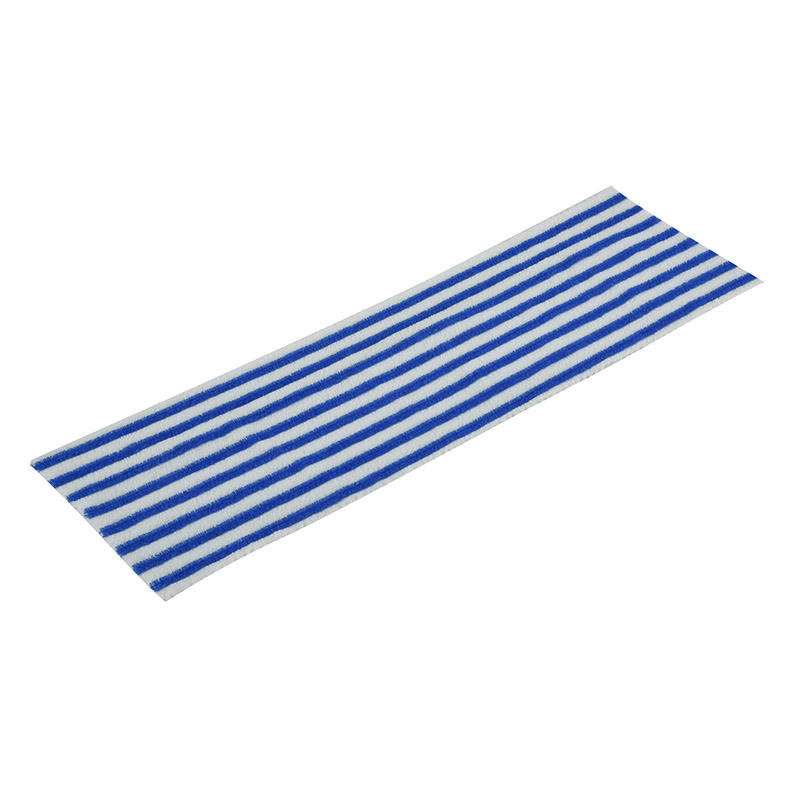
Heavier soil loads require a microfiber scrub mop with more aggressive scrubbing fibers. The raised scrubbing stripes on some models provide the mechanical action needed to break up dried-on soils and biofilms without damaging the surface.
The Cleaning Technique That Works
The technique used with a microfiber scrub mop matters as much as the tool itself. The most effective method is the "S" or figure-eight pattern, which ensures full coverage and prevents the mop from simply pushing soil ahead of it.
Start at the farthest point from the exit and work backward. Overlap each pass by about one-third of the mop head width. Change the mop head or flip it to a clean side when it becomes soiled. For a disposable microfiber scrub mop, replace the pad when it shows visible soil or after each room.
One common mistake is applying too much pressure. A microfiber scrub mop does not require heavy scrubbing—the fibers do the work. Light to moderate pressure allows the micro-hooks to capture soil without forcing it into the surface.
A Real-World Example: The Hospital That Cut Infection Rates
A 300-bed hospital in the Midwest was struggling with elevated C. difficile infection rates. The infection control team traced the problem to the mopping system—traditional string mops were not removing spores from surfaces, and the same mop heads were being used across multiple patient rooms.
The hospital switched to a microfiber scrub mop system with color-coded heads. Red heads for isolation rooms, yellow for general patient rooms, blue for public areas. Each mop head was used once per room and then laundered. The raised scrubbing fibers physically removed spores that chemicals alone could not kill.
Within three months, C. difficile infection rates dropped by 62%. The cleaning team reported that the microfiber scrub mop required less physical effort and delivered visibly cleaner floors. The hospital saved an estimated $400,000 in avoided infection-related costs in the first year.
Frequently Asked Questions
What is a microfiber scrub mop?
A microfiber scrub mop is a cleaning tool that uses split microfiber technology with raised scrubbing fibers to physically lift and trap dirt, bacteria, and contaminants from surfaces. It removes 99.9% of tested viruses and bacteria with water alone.
How does a microfiber scrub mop remove bacteria without chemicals?
The split microfiber fibers create millions of microscopic hooks and channels that physically lift and trap bacteria and contaminants. The raised scrubbing fibers provide mechanical agitation that breaks up biofilms, allowing the microfiber to capture and remove pathogens.
How often should a microfiber scrub mop head be changed?
For disposable pads, change after each room or when visibly soiled. For reusable heads, change when the fibers become matted or worn. In high-traffic areas, reusable heads may need replacement every 2–3 months.
What is the color-coding system for microfiber scrub mops?
Color-coded mop heads are assigned to specific areas to prevent cross-contamination. Red typically indicates high-risk areas like restrooms, yellow for patient rooms, blue for general areas, and green for food service areas.
Can a microfiber scrub mop be used on all floor types?
A microfiber scrub mop is safe for most hard floor surfaces including vinyl, tile, sealed concrete, and hardwood. Always test on an inconspicuous area first. Avoid using on unsealed or damaged surfaces where moisture could penetrate.
How much liquid can a microfiber scrub mop head hold?
A standard 48 x 15 cm microfiber scrub mop head can hold up to 0.3 liters of liquid. The high absorbency allows efficient spill and stain management while the controlled release ensures surfaces are not left overly wet.