 EN
EN

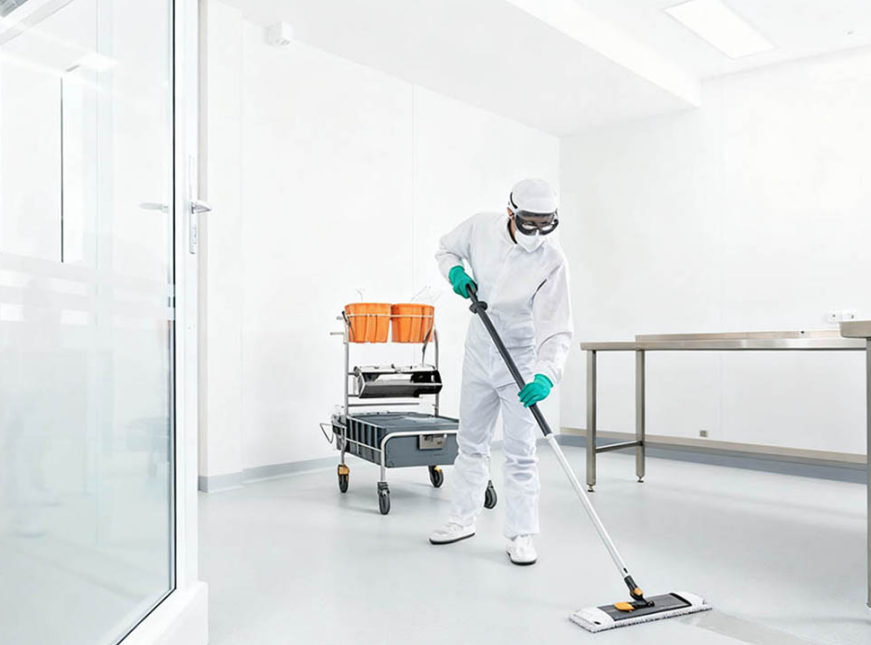
How Cleanroom Classifications Influence Mop Selection
The classification system for cleanrooms following ISO 1 through 5 standards really determines what kind of mops are needed to keep contamination levels within acceptable limits. In those super clean spaces like ISO Class 3 where there can be no more than 1,000 particles per cubic meter at 0.1 microns, manufacturers need mops that shed less than 1% of particles and pass rigorous lint-free tests. The standards get a bit more flexible as we move down to ISO 5 through 7 areas, though they still maintain pretty strict requirements. Take ISO 5 cleanrooms for example. These facilities need cleaning tools that can trap at least 99.9% of particles measuring 0.5 microns or larger when wiping surfaces. Industry standards such as IEST-RP-CC004.3 spell out these requirements in detail, ensuring that even minor deviations don't compromise product quality.
According to the latest edition of GMP Appendix 1 from 2023, all mops involved in aseptic processing need to go through gamma irradiation at least 25 kGy and complete sterilization-in-place (SIP) cycles before they can be considered safe for use. Facilities that follow strict IEST contamination control standards tend to favor mops with heat sealed edges and those made from non shedding knitted polyester heads. These newer designs cut down on fiber release by around 85% when compared to older mop models that many still remember using. Some big names in pharma manufacturing have actually seen their environmental monitoring alerts drop by about 40% since making the switch to ISO compliant mops featuring ULPA filters built right into the handle design. This kind of improvement makes sense given how critical maintaining cleanrooms really is for quality control purposes.
Matching Mop Performance to Cleanroom Classification Requirements
| ISO Class | Max Particles (≥0.5µ/m³) | Mop Head Specification | Sterilization Requirement |
|---|---|---|---|
| ISO 3 | 1,000 | Gamma-irradiated nonwoven | Double-bagged, autoclaved |
| ISO 5 | 100,000 | Heat-sealed microfiber | Ethylene oxide or SIP |
| ISO 7 | 352,000 | Low-lint polyester | On-site laundering |
This performance alignment ensures mops maintain ≤0.1 CFU/cm² post-sterilization in critical zones, per 2023 PDA Technical Report 90 benchmarks.
Essential Features of High-Performance Cleanroom Mops for Particle Control
Low Particle Shedding and Lint-Free Design in Cleanroom Mops
In cleanrooms and other high purity settings, facility managers need mops that trap dirt and debris instead of spreading it around. The market has shifted toward knitted polyester and nonwoven fabrics because they shed less than 0.1% of particles over 1,000 wipes according to ISO 14644-5 standards. These modern materials don't produce lint like traditional cotton does, and tests show they catch nearly all 0.3 micrometer particles when cleaning surfaces. Most manufacturers test their products against IEST-RP-CC004.3 requirements, ensuring there are no more than five particles larger than 0.5 micrometers per cubic foot after rigorous movement tests. This kind of validation gives facility managers confidence their cleaning tools meet strict contamination control needs.
Heat-Sealed Edges and Double-Bagged Laundering for Maximum Purity
Mop construction directly impacts contamination risks. Heat-sealed edges reduce fiber detachment by 98% compared to stitched alternatives, as shown in a 2023 Ponemon Institute study of ISO 3 facilities. Post-use laundering follows a strict double-bagged protocol:
- Contaminated mops enter primary containment bags at point of use
- Secondary packaging occurs before transit to cleaning stations
This dual-barrier approach prevents cross-contamination, maintaining <0.01% residual particle counts post-processing according to GMP Annex 1 updates.
Gamma-Irradiated Mops and Sterile Packaging for Critical Environments
In ISO 1 through 3 cleanrooms and other aseptic processing environments, gamma irradiation of mops achieves Sterility Assurance Levels (SAL) down to 10^-6, which actually goes beyond what's required by USP <797> standards for pharmaceuticals. The packaging matters too - triple layer polyethylene combined with oxygen scavengers keeps these items sterile for about twelve months straight. And those seals? They follow ISO 11607-2 validation protocols so they stay intact right up until someone needs them. Speaking of regulations, the FDA released new guidance back in 2023 that requires continuous particle monitoring during sterilization processes. This has pushed many ISO 13485 certified facilities toward implementing RFID tracking systems for their sterilization batches, making it easier to track and manage inventory across different production runs.
Microfiber vs. Polyester vs. Nonwoven: Evaluating Cleanroom Mop Head Materials
Microfiber and Knitted Polyester Mops: Absorbency and Particle Retention
In high purity settings, microfiber mops really stand out because they hold onto particles better than most and can soak up around six times their own weight in liquid. Some knitted polyester versions work great alongside microfiber too since they produce almost no lint at all (less than 0.1 particles per square centimeter) and can handle heat pretty well, which makes them suitable for those cleanrooms rated ISO Class 4 through 6. When looking at different mop materials for cleanrooms, tests show that microfiber grabs about 98% of those tiny 0.3 micrometer particles compared to just 85% captured by regular polyester mops. That kind of difference matters a lot when trying to keep contaminants under control in sensitive manufacturing areas.
Nonwoven Mop Heads: Advantages for Single-Use in Strict ISO Zones
In ISO 1 to 3 cleanrooms, nonwoven fabrics have become the go-to choice thanks to their lint-free properties and disposable nature that stops cross contamination problems before they start. Tests run in controlled environments show these materials leave behind about 40 percent less biological residue than regular reusable options, though results can vary depending on specific conditions. The way these fabrics are made without seams means fibers don't break off when harsh disinfectants are applied, which is why many facilities stick with them. They meet those tough IEST-RP-CC004.3 requirements for controlling particles, making them indispensable in places where even tiny specks matter, like semiconductor fabrication plants and pharmaceutical production areas where purity is absolutely critical.
Material Compatibility with Disinfectants and Sensitive Surfaces
Polyester fabric that's been knitted can stand up pretty well against 70% isopropyl alcohol and hydrogen peroxide solutions through hundreds of cleanings, sometimes over 200 cycles before showing signs of wear. Nonwoven versions hold their shape even when exposed to those quaternary ammonium compounds commonly used in cleaning products. What makes microfiber so effective? Its split fiber design spreads chemicals evenly across surfaces, which means no annoying streaks left behind on epoxy coated floors or shiny stainless steel countertops. Facilities managers know this matters a lot - our surveys show around 9 out of 10 cleanrooms rated above ISO 5 standards consider this feature essential for maintaining proper hygiene levels.
Reusable vs. Disposable Mop Heads: Trade-offs in Critical Cleanrooms
Microfiber or polyester mops that can be reused cut down on waste by about 60%, which is pretty impressive. But there's a catch they need special handling in laundry where they must go into two separate bags for each wash cycle costing between 12 to 18 cents per load plus expensive gamma irradiation to kill germs. On the flip side, single use nonwoven mop heads save time since nobody has to clean them again, though facilities typically spend around 23% more money every year when these are used constantly. Most places that maintain cleanrooms rated at Class 1000 or better tend to mix both approaches using the reusable ones for regular maintenance while switching to disposables whenever particles could become a real problem.
Integrating Cleanroom Mops into Standard Operating Procedures (SOPs)
Aligning Mop Selection with ISO 1–5 Cleaning and Disinfection Protocols
The ISO classification system plays a major role in determining what kind of mops are needed in areas where contamination control is critical. When facilities work within ISO 1 through 3 standards, which means there can be no more than 1,000 particles per cubic meter, special requirements kick in. These spaces need mops that have heat sealed edges and undergo gamma irradiation for sterilization so they can handle those extremely tight particle limits down to single digit microns. The situation changes somewhat for ISO 4 to 5 cleanrooms allowing up to 29,000 particles per cubic meter. Here, many operations find that good manufacturing practice compliant reusable systems work just fine if proper care is taken during washing cycles. But it's important these systems pass the IEST-RP-CC004.3 wipe testing standards to ensure they actually perform as expected in real world conditions.
Key alignment strategies include:
- Documented validation of mop head shedding (<10 particles/cm² at 0.5µ)
- Disinfectant compatibility matrices for alcohol/isopropyl wipe-downs
- Zone-specific protocols separating Grade A/B areas from ancillary spaces
Best Practices for SOP Integration and Process Consistency
Operational reliability requires embedding mop specifications into daily workflows through:
- Color-coded systems matching mop types to ISO zones (red = ISO 1, yellow = ISO 3)
- Two-person verification for pre/post-cleaning particle counts
- Blockchain-enabled logs tracking sterilization expiry dates
Facilities using validated three-bucket systems reduce cross-contamination risks by 62% compared to single-bucket methods (2024 Contamination Control Report). Monthly SOP audits and ATP bioluminescence testing ensure alignment with IEST and USP <797> surface criteria. Training simulations using UV tracer gels improve first-pass cleaning effectiveness to 98.7% in certified operators.
Emerging Innovations in Cleanroom Mop Technology
Next-Gen Microfiber Mops for Superior Contamination Control
The latest generation of microfiber mops actually works by using electrostatic charges to grab those tiny particles that regular polyester mops miss completely. Tests show these new mops catch around three times as many submicron particles compared to older models, according to industry research from last year. What's really interesting is how companies are combining special antimicrobial treatments with advanced weaving methods that prevent fibers from breaking off. This means less than one tenth of a percent of particles get released back into the air in cleanrooms rated ISO Class 3 to 5. For pharmaceutical facilities dealing with strict cleanliness standards, this matters a lot. Facility managers report that nearly four out of five contamination incidents actually come from cleaning equipment itself, which explains why so many labs are upgrading their cleaning supplies these days.
Smart Monitoring and Traceability in Mop Sterilization Processes
Mop systems with RFID tags can now monitor how many times they've been sterilized and check for leftover particles, which helps keep things in line with those tough ISO 14644-1:2015 standards. The mops themselves have sensors built into the handle that give a heads up to techs whenever microbes go over 0.1 CFU per square centimeter. That's pretty important stuff for those cleanrooms where semiconductors get made. Facilities regulated by the FDA have seen a drop of around 41% in mistakes during procedures since adopting this IoT tech, according to recent validation tests done in 2024. Makes sense really, because nobody wants contamination issues slowing down production.
Table of Contents
- How Cleanroom Classifications Influence Mop Selection
- Essential Features of High-Performance Cleanroom Mops for Particle Control
- Microfiber vs. Polyester vs. Nonwoven: Evaluating Cleanroom Mop Head Materials
- Integrating Cleanroom Mops into Standard Operating Procedures (SOPs)
- Emerging Innovations in Cleanroom Mop Technology