 EN
EN

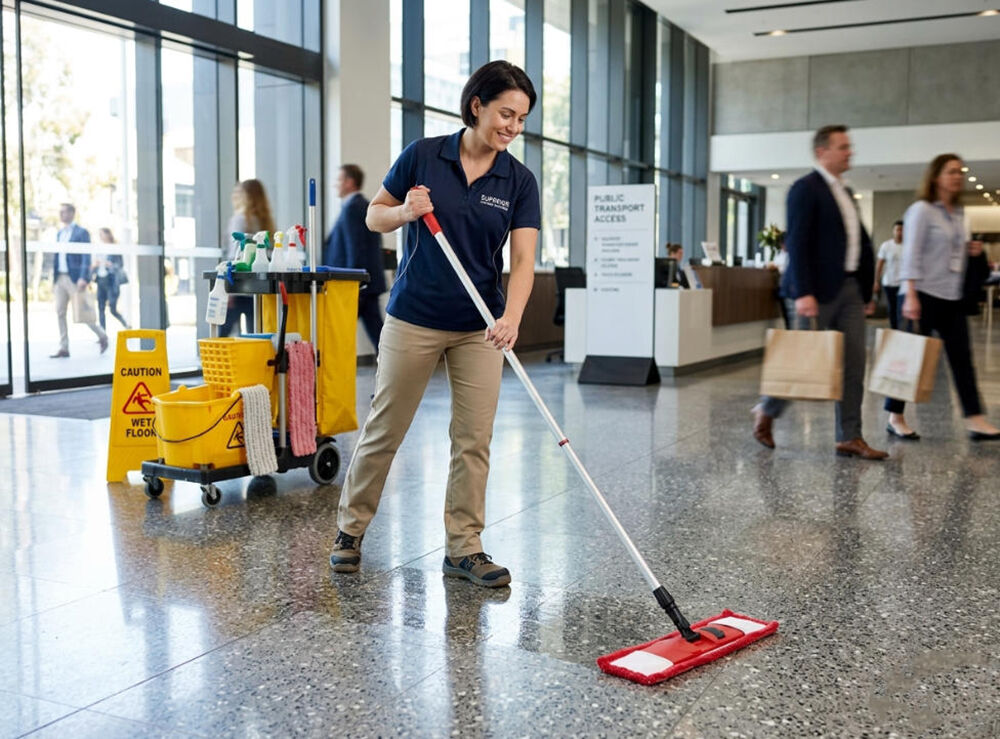
Unmatched Cleaning Performance: How Microfiber Mop Removes Bacteria and Grime
Split-Fiber Technology: Capturing Sub-Micron Particles That Cotton Misses
The cleaning power of a microfiber mop begins with its unique construction. Unlike traditional cotton fibers—which are round, smooth, and relatively coarse—microfiber strands are split during manufacturing into millions of microscopic wedges. This split-fiber technology creates an immense surface area within a single mop head, with fibers up to 100 times finer than a human hair. Their ultra-fine, jagged structure enables them to penetrate microscopic crevices in flooring and act like tiny hooks, trapping and retaining dust, grime, and bacteria rather than pushing them around. Independent laboratory testing confirms that microfiber mop systems remove 99% of microbes from surfaces using only water, compared to just 30% removal with conventional cotton mops.
Electrostatic + Mechanical Action: Why Microfiber Mop Outperforms Traditional Options
Microfiber’s superiority stems from a dual-action cleaning mechanism: mechanical scrubbing and electrostatic attraction. Mechanically, the dense network of split fibers physically abrades and lifts embedded soils. Simultaneously, the manufacturing process imparts a natural positive electrostatic charge to the fibers—drawing in negatively charged particles like dust, pollen, and many bacteria. This synergy allows microfiber to capture and retain contaminants deep within the pad until rinsing, eliminating the need for harsh chemicals while delivering measurable hygiene gains. In commercial settings where infection control and efficiency are critical, this combination delivers consistently higher pathogen reduction per pass than any traditional mop system.
Operational Efficiency: Time, Labor, and Cost Savings with Microfiber Mop
Fewer Bucket Trips and Faster Coverage: Real-World Productivity Gains
Microfiber mops require significantly less water and cleaning solution than cotton alternatives—thanks to their superior absorption capacity and capillary action. A single microfiber pad holds moisture evenly and releases it controllably, enabling staff to clean larger areas before needing to reload. Facilities report productivity improvements of up to four times faster coverage, reducing labor time and physical strain associated with frequent bucket trips. This efficiency translates directly into reclaimed labor hours, lower fatigue-related errors, and improved worker retention.
Industry Adoption: 78% of Top Facility Management Firms Rely on Microfiber Mop
According to recent industry surveys, 78% of top-tier facility management firms now standardize microfiber mopping systems, citing consistent gains in speed, consistency, and cost control. These organizations benefit from reduced water and chemical consumption, fewer consumable replacements, and reusable pads rated for hundreds of industrial washes—lowering total cost of ownership versus disposable cotton options. This widespread adoption reflects more than trend-following; it signals microfiber’s role as the operational benchmark for lean, high-performance cleaning programs.
Enhanced Safety: Reduced Slip-and-Fall Risk Through Controlled Moisture Management
Microfiber mops minimize slip-and-fall hazards by leaving floors nearly dry after use. Each split fiber functions like a microscopic straw, wicking moisture rapidly into the pad rather than spreading it across the surface. This capillary absorption reduces residual wetness to a thin, fast-evaporating film—unlike cotton mops, which often leave behind pooling water or streaky dampness. As a result, floor surfaces become safe for foot traffic seconds after cleaning. Facilities transitioning to microfiber report measurable declines in accident-related claims, while also protecting floor finishes and subfloors from water damage—making it especially valuable in high-traffic retail, healthcare, and education environments.
Cross-Contamination Control and Floor-Type Versatility with Microfiber Mop
Color-Coded Systems and Zoning Protocols for Healthcare and Education Facilities
In high-risk environments like hospitals and schools, cross-contamination remains a top concern. Microfiber supports robust infection prevention through standardized color-coding and zoning protocols: red mop heads for restrooms, blue for patient or classroom zones, and green/yellow for food service or common areas. When paired with single-use disposable microfiber pads—proven to remove up to 99.99% of tested pathogens—this system eliminates pathogen transfer between zones entirely. A landmark 2013 study found that 27% of newly laundered cotton mop heads from hospitals still tested positive for harmful pathogens, underscoring the reliability advantage of disposable microfiber. For education facilities, the same logic applies: dedicated colors for restrooms, classrooms, and cafeterias streamline workflows while supporting both safety and compliance. Critically, microfiber performs reliably across diverse flooring—including vinyl, ceramic tile, linoleum, and sealed hardwood—without sacrificing cleaning efficacy or requiring surface-specific tools.
FAQ
Why is microfiber better than cotton for cleaning?
Microfiber’s split-fiber technology and electrostatic action allow it to trap and retain bacteria, dust, and grime more effectively than cotton, which tends to push contaminants around.
Can microfiber mop systems be used without chemicals?
Yes, microfiber mops can remove up to 99% of microbes from surfaces using only water, reducing the need for harsh chemicals.
How do microfiber mops improve operational efficiency?
They require less water and cleaning solution and can cover larger areas faster, which saves time, labor, and costs.
What environments benefit most from microfiber mops?
Microfiber mops are ideal for healthcare facilities, schools, retail spaces, and any environment requiring high pathogen control and safety standards.
How does microfiber help prevent cross-contamination?
Color-coded systems and disposable pads ensure pathogens aren’t transferred between cleaning zones, making microfiber particularly effective in hospitals and schools.
Table of Contents
- Unmatched Cleaning Performance: How Microfiber Mop Removes Bacteria and Grime
- Operational Efficiency: Time, Labor, and Cost Savings with Microfiber Mop
- Enhanced Safety: Reduced Slip-and-Fall Risk Through Controlled Moisture Management
- Cross-Contamination Control and Floor-Type Versatility with Microfiber Mop
- FAQ