 EN
EN

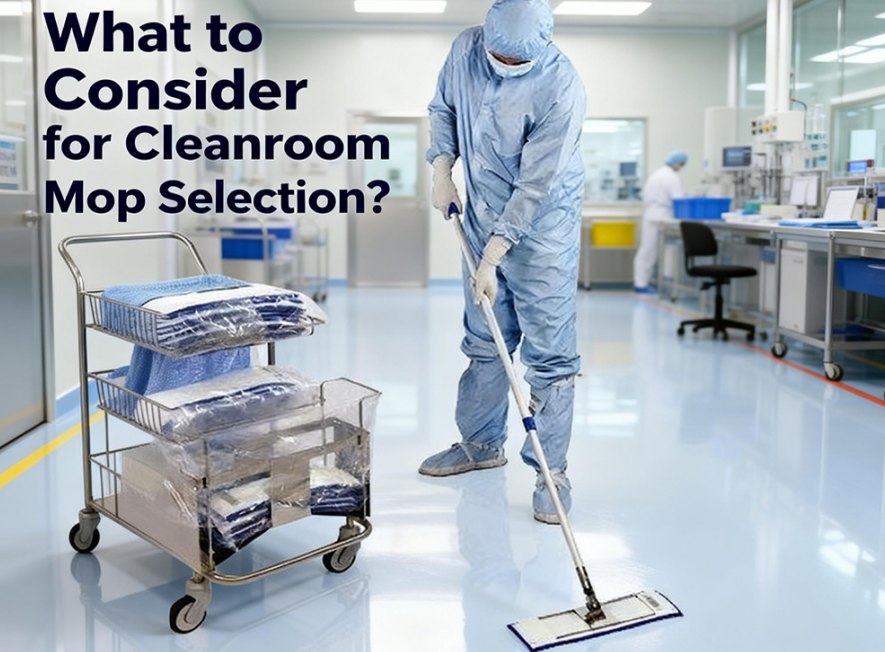
Core Cleanroom Mop Selection Criteria: Particle Shedding, Sterility, and Material Compatibility
Why particle release from cleanroom mops jeopardizes ISO 14644-18 compliance
When cheap cleanroom mops shed particles, they basically wreck any chance of meeting ISO 14644-18 standards because those tiny bits get everywhere and blow past what's allowed for each class level. Take ISO Class 5 spaces for instance, where we're only supposed to see under 100 particles bigger than 0.5 microns in every cubic meter of air. The problem? Even when mops drop just over 10 such particles per swipe, contamination jumps by nearly half, according to that recent 2023 benchmark study on cleanrooms. What happens next is pretty bad business-wise. These little escapees mess with the carefully controlled airflow patterns, land on sensitive equipment surfaces, and mess up all the environmental testing results. And guess what? That means getting hit with citations when inspectors come around. Better mops made with heat-bonded fibers instead of those resin coatings actually work wonders. They trap the microscopic debris inside the mop itself rather than letting it fly out when someone wrings them or moves across surfaces.
ISO 14644-18:2023’s standardized testing framework for fiber shedding and submicron emissions
ISO 14644-18:2023 establishes a rigorous, evidence-based validation framework for cleanroom mops—replacing subjective assessments with quantifiable performance metrics. Facilities must verify mop suitability using three core tests:
- Liquid particle counting, which measures particles ≥0.3 μm released during simulated cleaning cycles;
- Helium pycnometry, assessing submicron fiber fragmentation under disinfectant exposure; and
- ESD-compatibility trials, evaluating electrostatic discharge risks on sensitive flooring.
| Test Parameter | ISO Class 5 Requirement | ISO Class 7 Tolerance |
|---|---|---|
| Particles ≥0.5μm | ≤10 per m² wiped | ≤100 per m³ |
| Fiber fragmentation | <5% after 20 cycles | <15% after 20 cycles |
| Sterility assurance | SAL 10⁻⁶ | SAL 10⁻³ |
This framework ensures mops maintain particle counts within defined thresholds across their service life. Facilities relying on non-validated mops face a 78% higher rate of audit non-conformances, per 2024 regulatory enforcement data.
Cleanroom Mop Types and Material Performance: Flat, Stringless, and Microfiber vs. Polyester
Flat cleanroom mops in ISO Class 5–7: Advantages, edge-trapping risks on ESD floors, and construction best practices
Flat mops tend to be the go-to option in ISO Class 5 to 7 cleanrooms because they cover more area at once, apply even pressure everywhere, and work just as well on walls and ceilings as they do on floors. The problem comes with those old school stitched edges though. On ESD rated flooring specifically, these seams trap tiny fibers which then get released back into the air over time, creating contamination issues nobody wants. That's why thermally sealed edges have become so popular lately. They stop the fraying completely and actually incorporate conductive threads that help drain away static electricity properly. For top performance, look for mops made with continuous filament polyester heads where all the edges are fully fused together instead of cut pile designs that just collect dust and particles. When it comes time to replace them, don't fall for generic cycle numbers. Check how long they last based on actual test results from ISO 14644-18:2023 shedding standards instead.
Lint-free performance drivers: Fiber denier, weave density, and thermal bonding versus resin coating
Achieving genuine lint-free results relies on three key factors working together. First, fibers finer than 0.5 denier tend to shed less naturally. Second, dense weaves with at least 200 threads per square inch help keep those pesky loose strands from escaping. And finally, how the edges are sealed makes all the difference in maintaining quality over time. According to tests outlined in ISO 14644-18 from 2023, thermally bonded edges hold particles better than resin coated ones by about two thirds after going through fifty washes. The heat fusion technique actually fuses the edges into one solid piece that resists chemicals pretty well. Resin coatings don't stand up to things like hydrogen peroxide though they tend to break down and develop cracks over time. When looking at cleanrooms rated between ISO Class 4 and 6, double knitted polyester materials with complete thermal bonding offer the best compromise. They soak up liquids adequately while still preventing those tiny particles smaller than half a micrometer from floating around.
Disinfectant Compatibility and Sterility Assurance for Cleanroom Mops
How sodium hypochlorite >500 ppm degrades polyester mops—accelerating micro-shedding after repeated laundering
When sodium hypochlorite concentrations go above 500 ppm, they start breaking down polyester fibers through chemical hydrolysis. This isn't just theoretical either. After about ten to fifteen sterilization cycles, we see increased fiber degradation leading to microscopic shedding. The real problem comes from those tiny particles under 5 microns that slip past even ISO Class 5-8 air quality standards. For facilities relying on hypochlorite solutions, it's critical to run compatibility tests using accelerated aging methods that simulate over 200 cycles. And when possible within operational constraints, switching to monomer-free materials that resist hydrolysis makes sense for long term equipment integrity.
Gamma-irradiated, lot-traceable cleanroom mops meeting USP <797> and EU GMP Annex 1 sterility standards (≤1 CFU per head)
In areas where sterility is absolutely essential, cleaning must be done with single-use mops that have been treated with gamma radiation and meet a Sterility Assurance Level (SAL) of at least 10^-6. The packaging needs to be lot traceable so facilities can maintain proper documentation when complying with standards like USP Chapter <797> for pharmacy compounding work and EU GMP Annex 1 requirements that limit microbes to under 1 colony forming unit per mop surface area. After sterilization, there are several tests to check if packages remain intact. Visual inspections happen first, followed by dye penetration tests that reveal any hidden damage. These checks ensure nothing gets into sensitive environments that could potentially ruin batches or contaminate products during manufacturing.
Operational System Design: Frames, Wringers, and Workflow Best Practices
Closed-system anodized aluminum wringers: 78% lower recontamination vs. open-bucket systems (per ISO 14644-18 Annex D)
Studies show that closed system wringers featuring anodized aluminum parts cut down on recontamination risks by about 78% when compared against traditional open bucket models according to ISO 14644-18 Annex D standards. The problem with open systems is they let those used cleaning solutions get exposed to regular air around them. This creates tiny airborne particles and allows for cross contamination through splashes back onto surfaces. Sealed wringers work differently though. They keep all the fluids contained inside their non reactive, corrosion resistant surfaces which stops both the spread of particles through the air and protects workers from coming into contact with harmful substances. There are other advantages too worth mentioning. These systems help suppress static electricity thanks to their conductive materials. They also offer better control over how hard the wringer presses down on mops, which actually makes those mop heads last longer. Plus there's improved temperature management. Closed systems hold onto disinfectant temps roughly 40% better during transfers, so the germ killing power stays strong throughout the process. To make things run smoothly in practice, it makes sense to pair these wringers with color coded frames. This simple step prevents people from accidentally moving equipment between different zones and helps establish proper mopping routines going from most sensitive areas towards less important ones.
FAQ
What are the main criteria for selecting cleanroom mops?
The main criteria include particle shedding rates, sterility assurance, and material compatibility with disinfectants.
Why is particle shedding a concern for cleanroom mops?
Particle shedding can lead to contamination, compromising ISO 14644-18 standards and affecting sensitive equipment and environmental testing.
What tests validate cleanroom mop effectiveness according to ISO 14644-18:2023?
Tests include liquid particle counting, helium pycnometry for fiber fragmentation, and ESD-compatibility trials.
How does sodium hypochlorite affect cleanroom mops?
Sodium hypochlorite concentrations above 500 ppm can degrade polyester mops by accelerating micro-shedding through chemical hydrolysis.
Table of Contents
- Core Cleanroom Mop Selection Criteria: Particle Shedding, Sterility, and Material Compatibility
- Cleanroom Mop Types and Material Performance: Flat, Stringless, and Microfiber vs. Polyester
- Disinfectant Compatibility and Sterility Assurance for Cleanroom Mops
- Operational System Design: Frames, Wringers, and Workflow Best Practices
- FAQ