 EN
EN

Disposable Hospital Curtains: An Efficient Solution for Infection Control in Healthcare Facilities
Time : 2026-02-27
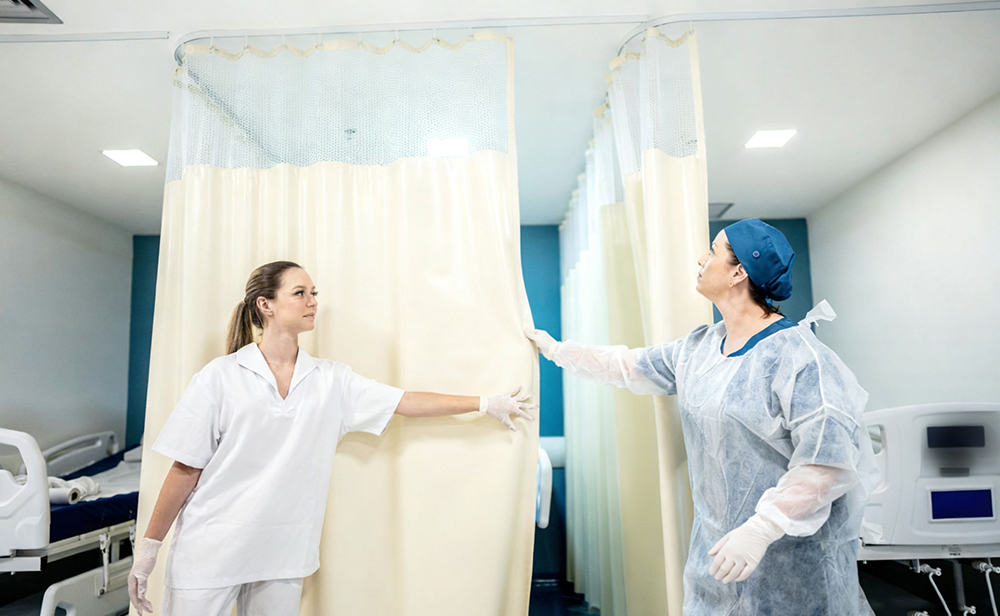
Hospital curtains have long been recognized as potential reservoirs for pathogens in healthcare environments. Disposable hospital curtains, also known as single-use curtains, are emerging as an effective solution to reduce the risk of hospital-acquired infections while improving workflow efficiency. These curtains are increasingly adopted in hospitals, nursing homes, and other healthcare settings due to their antibacterial properties, convenience, and compliance with infection control standards.
Key Benefits: Safe, Convenient, and Controlled Protection
The primary advantage of disposable hospital curtains lies in their ability to remove contaminated surfaces physically. Unlike traditional fabric curtains that are repeatedly laundered, disposable curtains are regularly replaced, eliminating accumulated bacteria and pathogens. Many of these curtains also feature antimicrobial coatings or functional additives that inhibit microbial growth upon contact, providing an extra layer of protection.
Materials and Functional Treatments
Common materials used in disposable hospital curtains include polypropylene (PP), polyester (PET) composites, and polyethylene (PE) coated fabrics:
・ Polyester (PET) Composite: Combines higher tensile strength with easy handling, ensuring durability during installation and replacement.
・ Polyethylene (PE) Coated: Offers near-impermeable protection in high-contamination areas.
To enhance antibacterial performance, manufacturers apply specialized surface treatments such as quaternary ammonium compounds, polysiloxane coatings, or advanced polymer additives. These treatments effectively reduce surface bacteria, lowering the risk of patient-to-staff or patient-to-patient transmission.
Antibacterial Mechanisms and Clinical Evidence
Disposable hospital curtains reduce microbial transmission through three main mechanisms: physical barrier, frequent replacement, and antimicrobial surface treatments. Clinical studies have demonstrated that antimicrobial-treated curtains can significantly decrease bacterial colony counts (CFUs) on surfaces, including major hospital pathogens such as Staphylococcus aureus (MRSA) and Escherichia coli.
By providing consistent removal of contaminated surfaces, these curtains reduce reliance on chemical disinfectants, which may lose effectiveness over time or contribute to microbial resistance.
Testing Standards and Compliance
Regulatory agencies and industry standards ensure the safety and effectiveness of disposable hospital curtains. Standardized tests, including ISO methods, measure bacterial reduction through contact inhibition and zone of inhibition assays. For instance, quaternary ammonium-treated curtains can achieve up to 99–100% CFU reduction within a few hours of microbial contact.
Healthcare institutions typically evaluate disposable curtains based on local and national codes, infection control guidelines, and certifications from authorities such as the Centers for Disease Control and Prevention and the Food and Drug Administration. Compliance ensures that curtains maintain antibacterial performance while remaining compatible with cleaning protocols.
Comparison with Traditional Fabric Curtains
Durability and Maintenance
Traditional fabric curtains may last up to ten years with repeated laundering but require significant labor, time, and operational resources for removal, washing, and reinstallation. Disposable curtains, by contrast, are typically used for a single patient or up to three months depending on the setting, enabling quick replacement without disrupting daily operations.
A study reported that over 90% of hospital curtains became contaminated within one week of rehanging, highlighting the need for effective, single-use solutions.
Cost-Effectiveness
While reusable curtains may save money over a long period, disposable curtains often provide short-term cost efficiency by eliminating laundry costs and minimizing workflow interruptions. For example, the cost of maintaining reusable curtains—including washing and labor—can reach tens of thousands of dollars annually, while disposable curtains cost approximately $25 per unit.
The simplified replacement process also frees staff time, contributing to better adherence to infection control protocols and improved patient safety.
Best Practices for Implementation
Healthcare facilities can maximize the benefits of disposable hospital curtains by following these guidelines:
1.Select the Right Material: Choose curtains based on clinical environment, contamination risk, and patient volume.
2.Verify Antibacterial Performance: Request laboratory test reports and certifications to ensure antimicrobial effectiveness.
3.Establish Replacement Protocols: Replace curtains at least monthly, or immediately if visibly soiled, damaged, or contaminated.
4.Integrate into Infection Control Programs: Use curtains alongside hand hygiene, surface cleaning, and other preventive measures to form a multi-layered infection control strategy.
Enhancing Patient Safety and Comfort
Disposable hospital curtains not only reduce infection risk but also improve patient comfort. Their lightweight design reduces noise and visual distractions, supporting restful recovery in shared patient accommodations. Consistently clean curtains signal a commitment to hygiene, safety, and quality care, enhancing overall patient satisfaction.
Conclusion
Disposable hospital curtains are an effective, practical, and cost-efficient solution for infection control in healthcare settings. Their single-use design eliminates the need for laundering, antimicrobial treatments prevent bacterial growth, and routine replacement ensures a consistently safe environment. By adopting disposable curtains, hospitals and care facilities can improve patient safety, optimize workflow, and align with best practices in infection prevention.