 EN

Cleanroom Mop Packaging: What Buyers Should Check Before Bringing Products into Controlled Areas
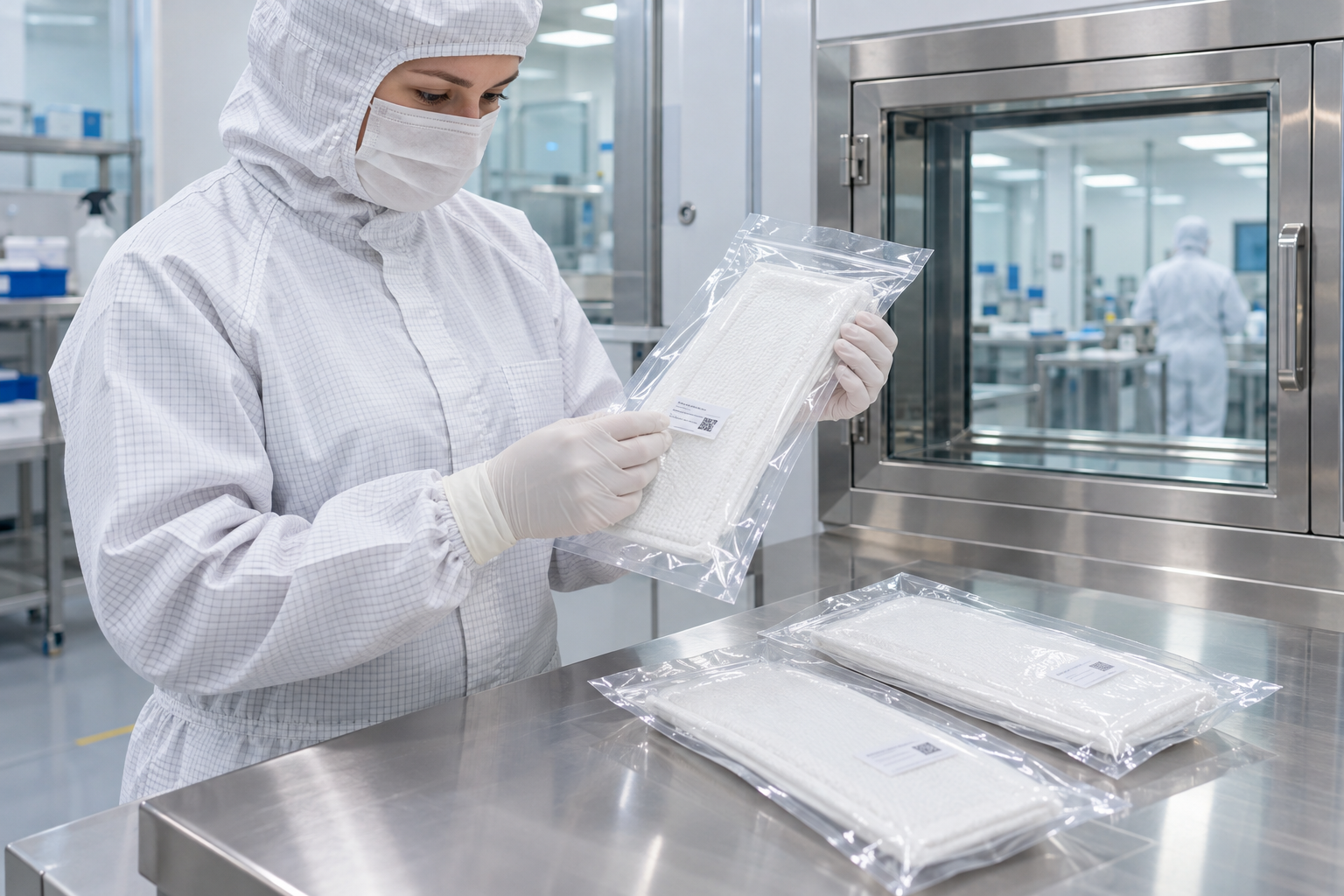
A cleanroom mop can meet the required fabric specification and still create problems at the material entrance. A damaged bag, an unreadable batch label or a pack that is difficult to open with gloves can complicate an otherwise straightforward cleaning task.
For buyers, packaging deserves the same attention as absorbency, particle release and mop-frame compatibility. It protects the product during transport and storage, but it also needs to work with the facility’s material transfer procedure.
Before approving cleanroom mop packaging, check its integrity, material, layer configuration, opening method, traceability and suitability for the intended transfer process. Where sterile products are required, review the sterilization and shelf-life evidence separately.
Start With the Material Transfer Route
Before asking whether a mop should be single-, double- or triple-bagged, establish how it will reach the point of use.
Will the shipping carton be removed in a receiving area? Where will the outer bag be taken off? Does the remaining package pass through a material airlock or undergo surface disinfection?
These details determine whether a packaging configuration is practical. Two layers may support one facility’s procedure, while another requires a different arrangement. More layers do not automatically make a product suitable for a cleaner environment.
ISO 14644-18:2023 provides a framework for assessing the suitability of cleanroom consumables. Buyers should assess the packaged mop against the intended application rather than treating “cleanroom packed” as a complete specification. iso.org
1. Inspect Bags and Seals on Arrival
Begin with a physical inspection of the delivered packaging. Look for punctures, split seams, abrasion, trapped material in seals and signs of moisture or contamination.
Inspect the inner packaging as well as the shipping carton. A carton can appear undamaged while a tightly packed mop frame or compressed stack has stressed the bags inside.
Ask the supplier how packaging integrity is checked during production and how transit damage is handled. For repeat orders, agree on acceptance criteria and a process for segregating questionable packs.
Visual inspection can identify obvious defects. It does not, by itself, demonstrate sterile barrier integrity or confirm that a package will remain protective throughout its claimed shelf life.
2. Review the Packaging Material
The bag is another material entering the transfer process. Buyers should ask what it is made from and whether supporting information is available for the intended use.
Useful questions include:
- Does the film shed particles during handling or opening?
- Are labels, inks and adhesives suitable for the transfer procedure?
- Can the package withstand normal handling without tearing?
- Are chemical cleanliness or electrostatic properties relevant to the application?
Requirements will differ between pharmaceutical production, electronics manufacturing and other controlled environments. A clear plastic bag may make inspection easier, but transparency alone says little about cleanliness.
Where packaging contamination could affect a sensitive process, define the relevant acceptance criteria with the facility’s quality or contamination-control team.
3. Make Each Packaging Layer Serve a Purpose
Double-bagged cleanroom mops can support staged unpacking, provided operators can remove the outer layer without contaminating the inner package.
Check whether the bags are independently sealed, easy to distinguish and large enough to handle with gloves. Tight-fitting layers can make separation awkward, particularly when operators must avoid touching the newly exposed surface.
A useful supplier discussion should establish:
- Which layer is removed at each transfer stage.
- Which surface requires disinfection.
- What remains protected until use.
- How the product is presented after opening.
For sterile pharmaceutical operations, official guidance identifies material transfer as a significant contamination risk. The packaging arrangement therefore needs to fit the site’s established transfer controls. This does not create a universal bag-count requirement for every cleanroom. Canada.ca
4. Check Compatibility With Surface Disinfection
If bags are wiped or sprayed before transfer, evaluate them with the facility’s actual disinfectant and procedure.
A general statement such as “alcohol resistant” may leave important questions unanswered. Compatibility depends on the formulation, concentration, contact time and exposure conditions.
During evaluation, check for film damage, seal deterioration, ink transfer, label lifting and loss of readability. Consider whether folds or overlapping labels make the exterior difficult to wipe consistently.
Disinfecting the outside of a bag also does not sterilize its contents. The transfer process and the product’s supplied condition are separate parts of the purchasing decision.
5. Separate Cleanroom Packaging From Sterile Supply
“Cleanroom packed,” “low-lint” and “sterile” describe different attributes. Buyers should not assume that one establishes the others.
If sterile cleanroom mop pads are required, request documentation linking the supplied product to the sterilization process and batch release. Review the stated sterilization method, expiry date, storage conditions and evidence supporting the packaging’s protective function.
A sterilization indicator may help identify exposure to a process, but it should not replace the relevant release documentation.
For non-sterile applications, focus on the cleanliness requirements that matter to the process. Specifying sterile supply without an identified need may add cost without resolving the actual contamination concern.
6. Test Opening and Pack Size With Operators
Packaging that looks acceptable on a purchasing sample can behave differently during a shift.
Ask operators to trial the pack while wearing their usual gloves. Can they open it without struggling? Does the opening expose the mop to the bag’s exterior? Are scissors needed, and are they permitted under the local procedure?
Pack quantity also affects handling. Large packs may reduce packaging use, but they can leave unused mop pads exposed after opening. Smaller packs may better match a cleaning task or shift.
Choose quantities around actual consumption and the facility’s procedure for handling opened packs.
7. Keep Batch Information Available After Unpacking
Traceability can be lost when the only batch label is attached to a discarded outer bag.
Check which identifiers remain available at each stage. Relevant information may include the product code, mop size, quantity, lot number and, where applicable, sterilization status and expiry date.
For distributors and OEM/ODM buyers, agree on label placement and document matching before production. Also clarify which packaging changes require notification, including changes to film, seals, labels or pack quantity.
For ESUN cleanroom mop enquiries, providing the intended application, transfer route and preferred pack size at the quotation stage can make sample evaluation more useful. Final approval should include a trial of the complete packaged product under the buyer’s own procedure.
Frequently Asked Questions
Are double-bagged mops suitable for every cleanroom?
No. Double bagging can support staged transfer, but suitability depends on the packaging materials, product condition and facility procedure.
Does cleanroom packaging mean the mop is sterile?
No. Sterile status requires separate supporting evidence. Cleanroom packaging alone does not establish sterility.
Should damaged packs be brought into controlled areas?
Questionable packs should be segregated and assessed under the facility’s quality procedure before release. A damaged outer bag also requires evaluation of the remaining protection.
What should buyers request before placing an order?
Request the packaging specification, layer configuration, label examples, storage instructions and relevant cleanliness or sterilization documentation. Evaluate a production-representative sample before approving routine supply.