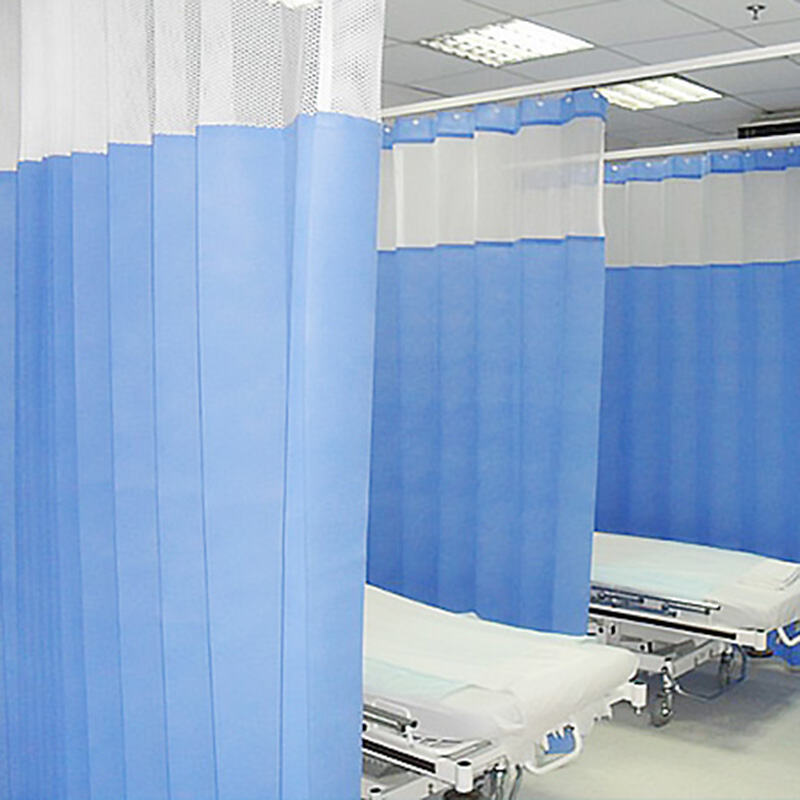
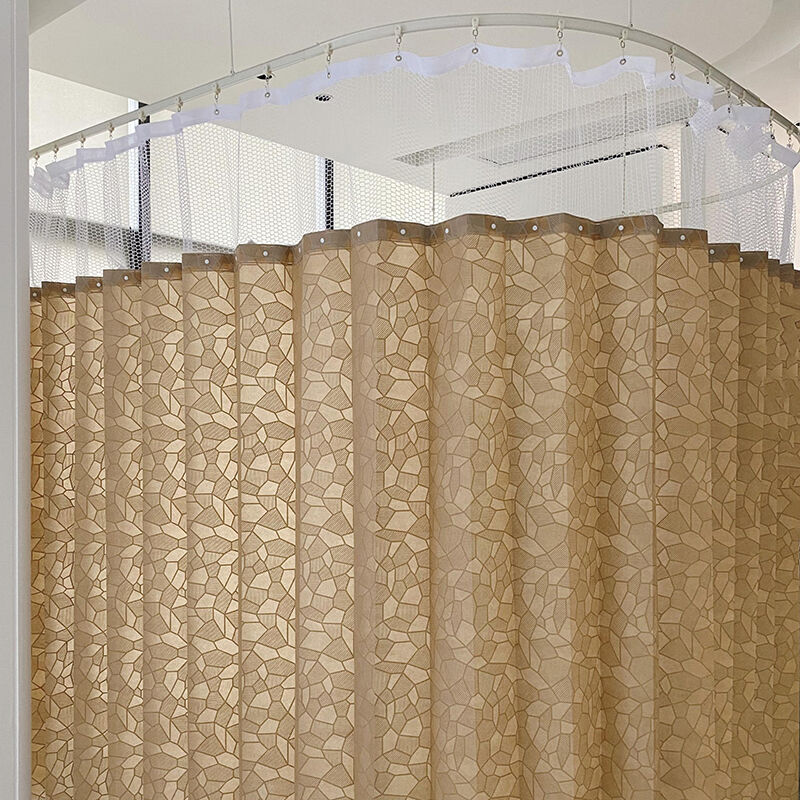
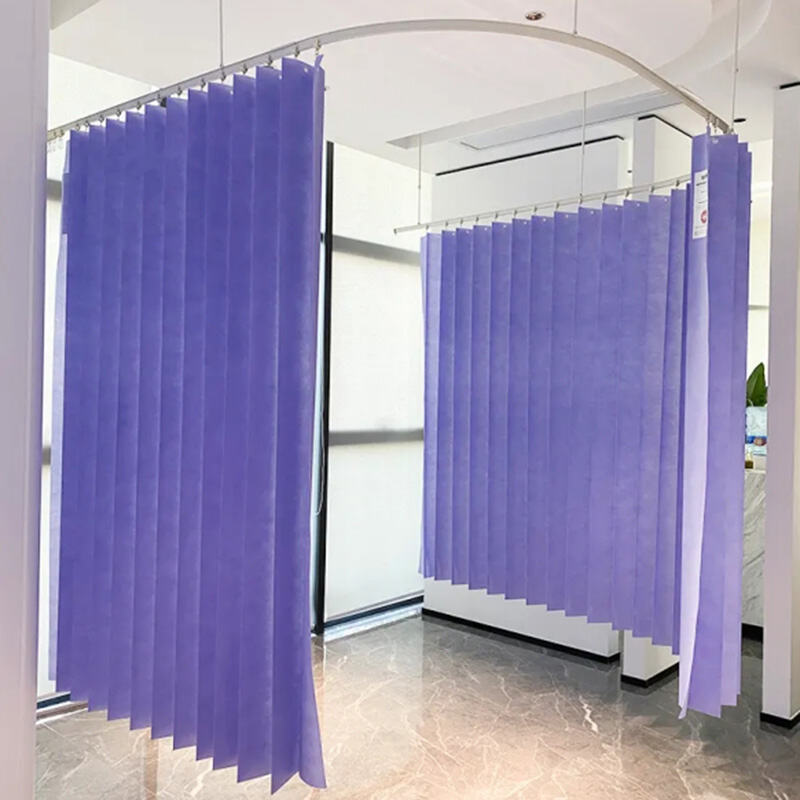
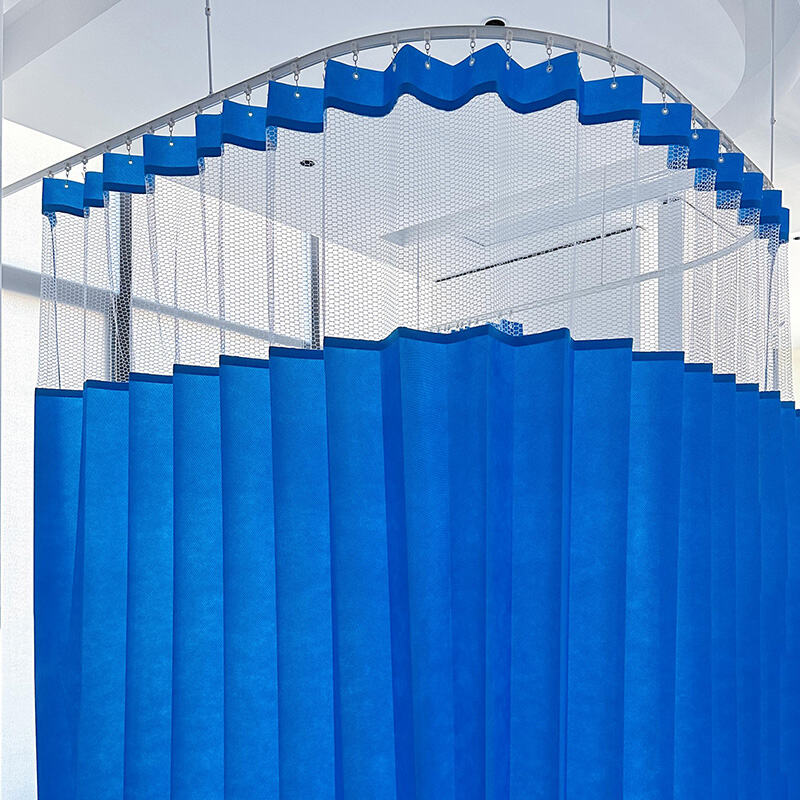
The management of the healthcare physical environment is a critical, yet complex, component in the prevention of Healthcare-Associated Infections (HAIs). While high-touch surfaces receive rigorous attention, soft surfaces like privacy curtains have been historically challenging. Studies have repeatedly demonstrated that reusable fabric cubicle curtains can harbor multi-drug resistant organisms (MDROs) such as MRSA, VRE, and C. difficile within days—and sometimes hours—of being placed in a clinical setting. Even with robust laundry policies, the handling, transport, and potential for biofilm formation present an ongoing risk. This evidence has catalyzed a shift towards Disposable Cubicle Curtains as a best-practice solution in defined high-risk scenarios, moving from a reactive cleaning model to a proactive, guaranteed hygiene model.
The core value proposition of a Disposable Cubicle Curtain is the assurance of a microbiologically clean barrier for every new patient admission or upon patient transfer/discharge in designated areas. This is non-negotiable in Isolation Rooms for contact, droplet, or airborne precautions, where the curtain acts as a physical zone divider. In these settings, the ability to safely doff and dispose of the curtain as part of terminal cleaning is a major advantage, ensuring no residual contamination remains for the next patient. Similarly, in high-throughput areas like Emergency Department bays and Outpatient Procedure/Endoscopy Suites, where patient turnover is rapid and clinical presentations are undifferentiated, disposable curtains provide a consistently fresh start without the scheduling complexities and downtime required for curtain changes with a reusable system.
Material science is paramount. High-quality disposable curtains are not simply thin sheets of plastic. They are engineered non-woven composites designed to balance several key properties: adequate opacity for patient dignity, sufficient tensile strength for clinical use without tearing, and essential fluid resistance (often meeting AAMI PB70 Level 2 or similar standards) to create a functional barrier against splash and spatter. Advanced materials also offer low permeability to liquids while maintaining breathability, which is crucial for air circulation in patient spaces. Furthermore, leading manufacturers ensure these curtains are produced in controlled, clean environments and can be gamma irradiated or ETO sterilized for guaranteed sterility in the most sensitive applications.
From a financial and sustainability perspective, the analysis extends beyond simple unit cost comparison. The true cost of a reusable curtain system includes the capital purchase, plus the perpetual cycle of labor (nursing/EVS staff time to remove and hang), logistics (transport to/from laundry), processing (water, energy, chemicals, machinery wear), and replacement due to wear, loss, or irreparable staining. A disposable system converts these variable, often hidden, operational expenses into a transparent, predictable consumable cost per patient encounter or per room turnover. For sustainability, modern disposable curtains are increasingly designed with environmental considerations, using materials that are more efficiently produced and can be incinerated without producing toxic fumes, with some options exploring recyclable components. When evaluating suppliers, it is essential to partner with a manufacturer like Esun, which has deep expertise in non-woven hygiene materials and operates its own R&D center, ensuring product innovation is driven by real clinical needs rather than commoditized production.
Implementing a disposable curtain program requires a clear protocol. Facilities typically define a “change schedule” based on clinical risk: for example, after every patient discharge in ICUs and isolation, every 48-72 hours in semi-acute wards, or immediately when visible soiling occurs. The simplicity of the change process—often involving unhooking and replacing a lightweight panel—empowers nursing staff to maintain the standard without waiting for support services. To explore how disposable cubicle curtains can be integrated into your facility's infection control strategy, and to receive detailed specifications, compliance documentation, and samples for evaluation, please contact our healthcare specialists for a confidential consultation.
 EN
EN