 EN
EN

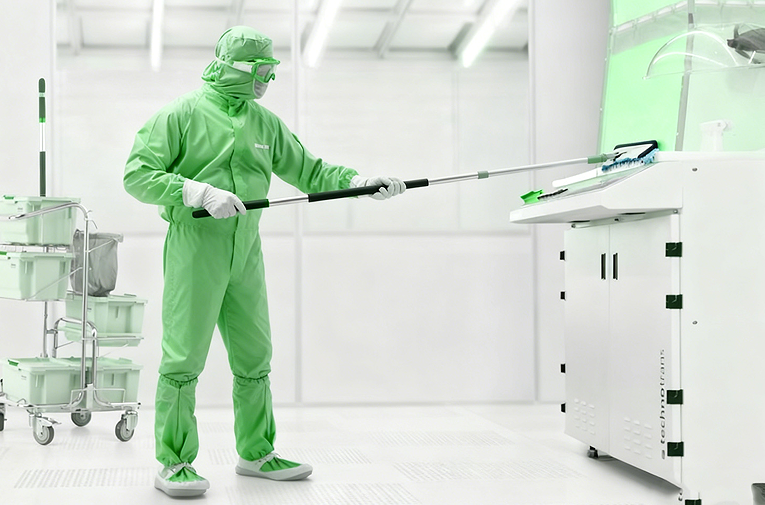
Match Cleanroom Mops to ISO Class Requirements
The ISO 14644-1 standard basically sets limits on how many particles can float around in the air inside cleanrooms, which directly affects what kind of mops are allowed. Take ISO Class 5 spaces for example these are often found where sterile drug products get filled into vials. The specs here say there should be no more than 3,520 particles that are at least 0.5 microns in size per cubic meter of air. To meet this requirement, facilities need special mops that shed almost nothing, have sealed edges made through heat bonding, and also manage static electricity properly. When companies ignore these requirements and bring in regular cleaning tools instead, they run serious risk of going over their particle count limits. This can lead to expensive fixes down the road or even worse problems with regulators shutting operations until everything gets back in compliance.
Why ISO 14644-1 Classification Dictates Mop Specifications
Higher ISO classes demand stricter construction standards. ISO Class 5 requires microfiber with heat-sealed edges to prevent fiber release; ISO Class 8 permits nonwoven alternatives. A mismatched mop increases contamination risk by 60%, violating FDA and EU GMP expectations.
Material and Construction Standards for ISO 5–7 Cleanrooms
For ISO 5–7 zones, mops must meet three core criteria:
- Static-dissipative materials to protect ESD-sensitive equipment
- Closed-cell foam cores to minimize particle entrapment and retention
- Zero chemical residue post-disinfection, verified via extractables testing, to avoid cross-contamination
Failure to meet these standards invalidates environmental monitoring data and may compromise product sterility assurance.
Compare Cleanroom Mop Materials for Contamination Control
Microfiber vs. Polyester vs. Nonwoven: Shedding, Entanglement, and Chemical Resistance
Material selection directly impacts particle control, surface compatibility, and long-term contamination risk. Each option serves distinct operational needs:
- Microfiber: Delivers ultra-low shedding and electrostatic capture of sub-micron particles. Resists IPA and hydrogen peroxide but degrades in high-pH cleaners. Best suited for ISO 5–6 aseptic processing.
- Knitted Polyester: Offers low-linting performance and exceptional durability against aggressive sporicides. However, its looped structure poses entanglement risks near equipment.
- Nonwoven Synthetics: Disposable, heat-sealed variants eliminate cross-contamination entirely and provide consistent shedding control. Moderate chemical resistance makes them ideal for sterile filling and terminal sterilization suites.
| Material | Particle Shedding | Entanglement Risk | Chemical Resistance | Primary Use Case |
|---|---|---|---|---|
| Microfiber | Ultra-Low | Moderate | Good (avoid pH >10) | ISO 5–6 aseptic processing |
| Knitted Polyester | Low-Linting | High | Excellent | Pharmaceutical compounding |
| Nonwoven | None (sealed) | None | Moderate | Sterile filling, biologics |
Absorbency, conductivity, and gamma-irradiation compatibility further refine selection: microfiber’s weight absorbency supports liquid-critical zones; conductive carbon-infused fibers are mandatory in ESD-controlled areas; and gamma-sterilized options ensure bioburden compliance for biologics manufacturing.
Evaluate Cleanroom Mop Design for Surface Integrity and ESD Safety
Designing cleanroom mops requires balancing particle control, surface compatibility, and electrostatic safety. Mops must preserve floor integrity while preventing static buildup that damages sensitive electronics or ignites volatile solvents.
Flat vs. Stringless Mop Heads: Particle Retention and Floor Compatibility
- Flat mop heads maximize contact area on smooth, seamless flooring typical of ISO 5–7 cleanrooms. Their tight, non-looped weave captures and retains particles rather than redistributing them.
- Stringless variants eliminate fraying and fiber entanglement in grooved, grouted, or uneven surfaces, preventing particle trapping in seams and reducing recontamination during reuse.
Heat-Sealed Edges and Static-Dissipative Features for Conductive Flooring
Heat-sealed edges are non-negotiable for ISO 5–7 use: they prevent fraying-induced lint generation and ensure dimensional stability after repeated laundering. For ESD safety:
- Carbon-infused or ionically treated fibers maintain surface resistivity, ensuring charge dissipation on conductive floors without sparking hazards near flammables.
- Industry data shows ESD-compliant mops reduce static-related defects by 28% in microelectronics labs.
- Always pair with validated cleaning agents: alcohol-based solvents degrade nonwoven binders and compromise microfiber integrity, increasing particulate release.
Integrate Cleanroom Mops into Validated Cleaning Protocols
Good cleaning procedures form the basis of keeping contaminants at bay, and mops used in cleanrooms play a really important role in this whole system. Standard Operating Procedures need to clearly spell out what kind of mop is being used, what materials they're made from, how often they should be replaced, the right way to disinfect them, plus those color codes based on ISO classes so nobody accidentally moves stuff between areas. Training workers properly matters a lot too. They need to know exactly how hard to squeeze out excess water, when it's time to swap out old mops, and check regularly for signs that edges are wearing down or fibers getting damaged.
Checking environmental conditions and doing regular audits helps determine if protocols are working properly. After implementing new mopping procedures, we generally see improvements in several key areas. Particle counts drop, microbial swabs show fewer contaminants, and ATP testing results decline overall. Keeping track of traceability information is also important for meeting regulations. This includes noting batch numbers, when items were sterilized, and how long they've been in use. These records come in handy when there's an investigation or someone needs to figure out what went wrong. Proper integration turns ordinary cleanroom mops into something much more than just cleaning tools. They become active control points that help maintain ISO 14644-1 standards, stay aligned with Good Manufacturing Practices, and most importantly protect patients from contamination risks.