 EN
EN

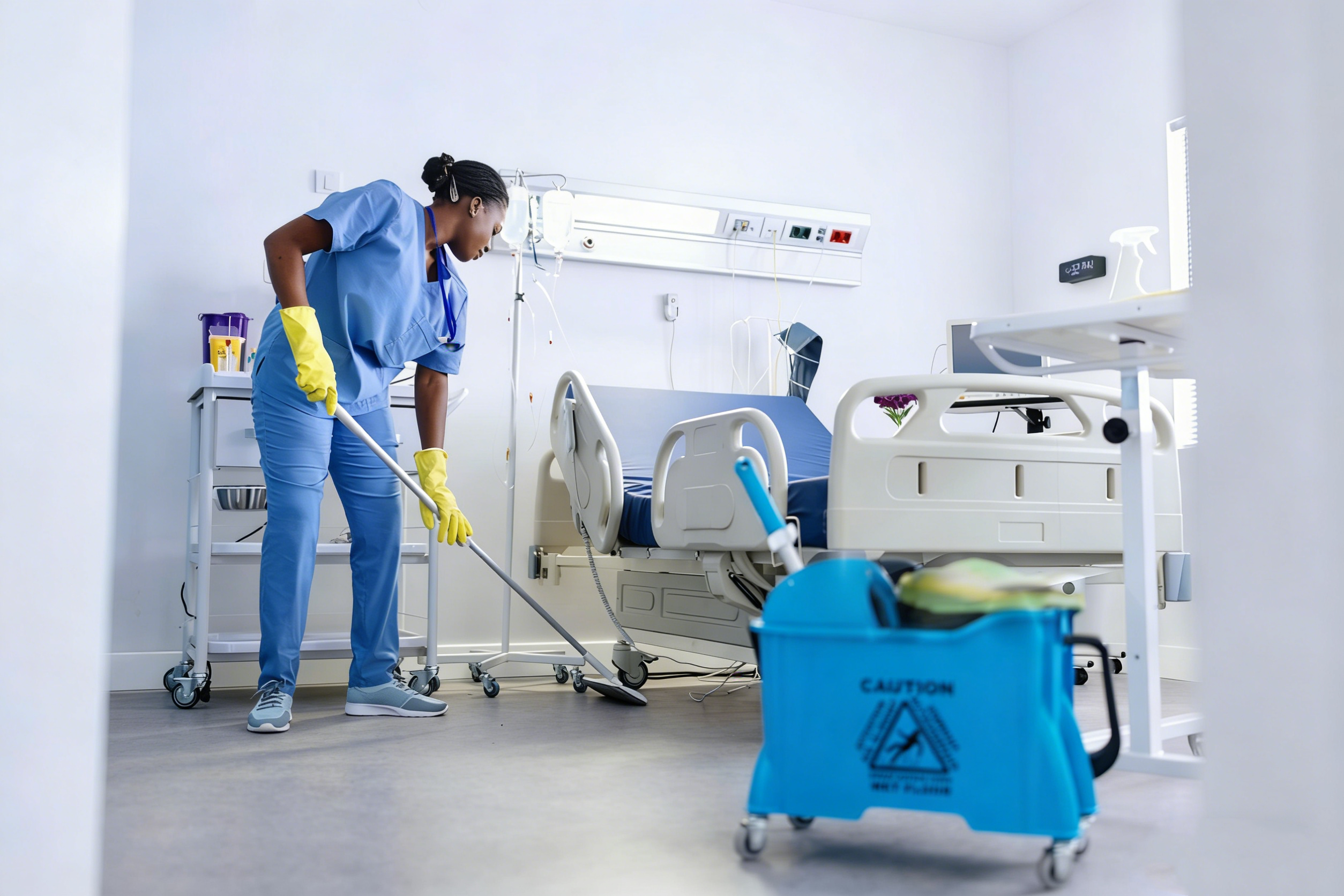
Critical Infection Control Gaps with Reusable Mops
Pathogen persistence on laundered microfiber mop heads
Reusable microfiber mop systems retain dangerous pathogens even after hospital-grade laundering. Studies reveal that nearly 27% of laundered mop heads still harbor Healthcare-Associated Infection (HAI) pathogens—including MRSA, Clostridioides difficile, and Vancomycin-resistant Enterococci (VRE)—because standard laundering fails to fully eliminate microbes embedded deep within the microfiber matrix. When reused, these contaminated mops redistribute pathogens across surfaces rather than removing them.
Re-inoculation risk during room turnover in high-acuity areas
In critical care units facing rapid room turnover, reusable mops become active vectors for cross-contamination. Research shows reusable microfiber removes only ~68% of surface microbes, compared to 95% removal achieved by disposable alternatives. This gap significantly increases re-inoculation risk—especially on high-touch surfaces like bed rails—where residual pathogens transfer directly from mop to patient environment. Operational pressures often compromise laundering fidelity, compounding the danger in immunocompromised patient zones.
| Cleaning System | Avg. Pathogen Removal Rate | Contamination Rate Post-Laundering |
|---|---|---|
| Reusable Mops | 68% | 27% |
| Disposable Mops | 95% | 0% |
This evidence underscores why healthcare facilities should prioritize disposable mop systems in infection-critical workflows.
Evidence-Based HAI Reduction with Disposable Mop Systems
38% decrease in HAIs across a 12-hospital trial (AJIC, 2023)
A landmark 12-hospital trial published in the American Journal of Infection Control (2023) demonstrated a 38% reduction in healthcare-associated infections following adoption of disposable mop systems. The study spanned diverse facility types and measured infection rates before and after implementation. Researchers attributed the decline primarily to elimination of pathogen carryover—a persistent flaw in reusable systems where laundered microfiber heads reintroduce contaminants during subsequent cleaning cycles. Disposable mop heads break this chain by delivering a fresh, sterile surface for every room. For administrators, the data supports strong ROI: upfront supply costs are offset by reduced HAI treatment expenses, shorter lengths of stay, and avoidance of CMS non-payment penalties.
Alignment with CDC Environmental Infection Control Guidelines
The CDC’s Guideline for Disinfection and Sterilization in Healthcare Facilities explicitly recommends single-use or dedicated cleaning equipment in high-risk areas to prevent cross-contamination. Disposable mop systems meet this standard precisely: each pad is used once and discarded, eliminating variability in laundering efficacy, drying protocols, and storage conditions—all common failure points in real-world settings. Regular audits of disposable mop use further strengthen compliance documentation, helping infection prevention teams demonstrate consistent adherence during regulatory inspections. This alignment reduces liability exposure while reinforcing a proactive, standards-based infection control framework.
High-Risk Clinical Settings Demanding Disposable Mop Adoption
ICUs: Rapid turnover and immunocompromised patient vulnerability
Intensive care units combine relentless bed turnover with populations highly vulnerable to infection. Even properly laundered reusable mops pose unacceptable risk when moved between rooms—microbial persistence in microfiber matrices can seed new environments with resistant organisms. Adopting disposable mops ensures each ICU room receives a sterile, performance-guaranteed cleaning tool. The 38% HAI reduction observed in the AJIC trial was especially pronounced in high-acuity units, validating disposable systems as a high-leverage intervention for protecting critically ill patients.
Isolation rooms and ORs: Zero-tolerance for cross-contamination
Isolation rooms and operating rooms require absolute assurance against microbial transmission. A single contaminated mop head can breach containment or compromise surgical asepsis—risks that disposable systems inherently eliminate. Pre-sterilized, single-use mop pads provide verifiable barrier integrity, supporting strict adherence to isolation protocols and surgical site infection (SSI) prevention standards. Color-coded disposable systems further reinforce zone-specific cleaning discipline, reducing human error in complex clinical workflows.
Disposable Mop Efficacy: Performance Data vs. Reusable Alternatives
Disposable mop systems deliver superior and predictable pathogen removal. Independent testing shows disposable microfiber pads remove 99.9% of tested bacteria and viruses using water alone—and achieve 99.99% reduction of human coronavirus OC43 on vinyl composition tile. In contrast, reusable microfiber degrades over time: repeated laundering (beyond ~500 cycles) causes irreversible fiber damage, diminishing soil capture, increasing microbial retention, and eroding cleaning consistency. Disposable pads avoid this degradation entirely—each unit performs to specification across its full coverage area, ensuring reliable, repeatable infection control outcomes in high-traffic clinical zones.
FAQ
Why are pathogens still present on laundered reusable microfiber mop heads?
Standard laundering methods often fail to fully eliminate microbes embedded deep within microfiber mop heads, allowing pathogens to persist even after cleaning.
How do disposable mop systems reduce healthcare-associated infections?
Disposable mops eliminate pathogen carryover since each mop pad is used once and provides a sterile cleaning surface, thereby reducing cross-contamination.
What are the CDC's guidelines regarding cleaning equipment in healthcare settings?
The CDC recommends single-use or dedicated cleaning equipment in high-risk areas to prevent cross-contamination, a standard met precisely by disposable mop systems.
What clinical zones benefit most from disposable mop adoption?
ICUs, isolation rooms, and operating rooms benefit the most due to their stringent infection control requirements and the vulnerability of their patient populations.
Do reusable microfiber mops degrade over time?
Yes, repeated laundering can cause fiber damage in reusable microfiber mops, reducing their ability to remove pathogens effectively.
Table of Contents
- Critical Infection Control Gaps with Reusable Mops
- Evidence-Based HAI Reduction with Disposable Mop Systems
- High-Risk Clinical Settings Demanding Disposable Mop Adoption
- Disposable Mop Efficacy: Performance Data vs. Reusable Alternatives
-
FAQ
- Why are pathogens still present on laundered reusable microfiber mop heads?
- How do disposable mop systems reduce healthcare-associated infections?
- What are the CDC's guidelines regarding cleaning equipment in healthcare settings?
- What clinical zones benefit most from disposable mop adoption?
- Do reusable microfiber mops degrade over time?