 EN
EN

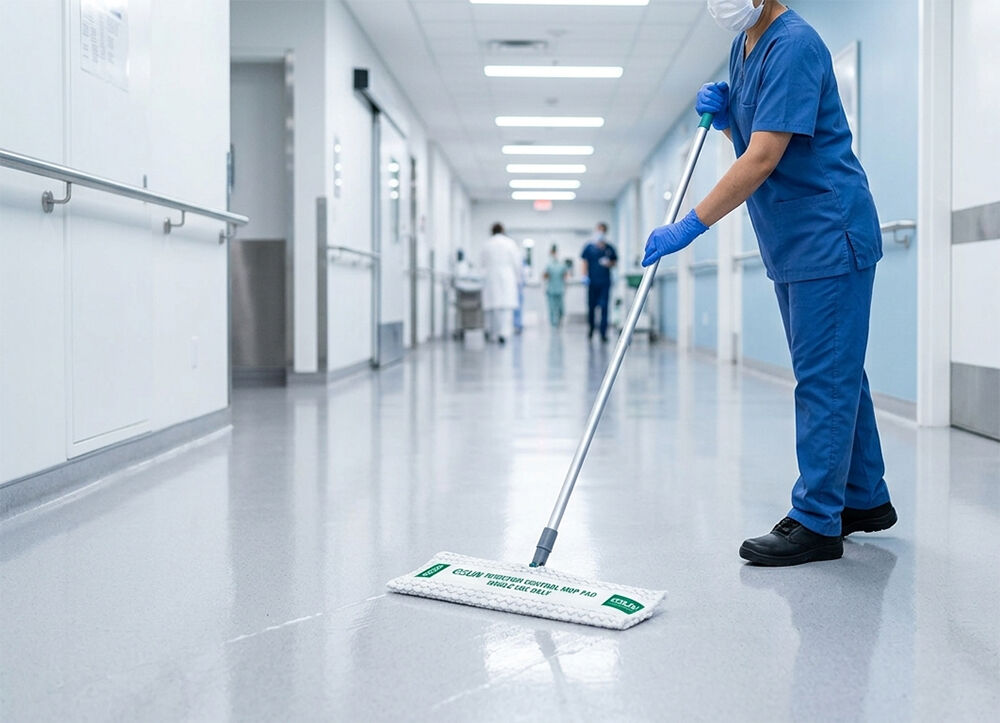
The Cross-Contamination Risk of Reusable Mopping Systems
How Laundered Mop Heads Harbor and Spread Pathogens Between Patient Areas
Reusable mop systems pose a well-documented cross-contamination risk in healthcare settings. Research confirms that laundered mop heads—including those subjected to high-temperature washing—can retain viable pathogens such as MRSA and Clostridioides difficile. When used across multiple patient rooms, these contaminated tools transfer microbes from high-risk areas (e.g., isolation units) into general wards and critical care zones. A peer-reviewed study found nearly 30% of “clean” reusable mops in active hospital use still carried detectable, clinically relevant pathogens. Moisture retention in mop fibers further exacerbates the issue, transforming them into mobile reservoirs for healthcare-associated infections (HAIs)—a particular concern in ICUs and surgical units where patient vulnerability is highest.
Biofilm Formation and Microbial Retention in Reused Cotton and Microfiber Mops
Both cotton and microfiber reusable mops support persistent biofilm formation: structured, matrix-encased microbial communities that resist standard disinfection protocols. With repeated laundering, biofilms accumulate and progressively shield embedded pathogens from chemical and thermal inactivation.
| Material | Degradation Issue | Pathogen Retention Risk |
|---|---|---|
| Cotton | Fiber breakdown after 50+ washes | High moisture retention creates ideal bacterial breeding conditions |
| Microfiber | Split-fiber deterioration reduces cleaning efficacy after ~100 washes | Trapped organic debris reactivates pathogens during subsequent use |
Damaged microfiber strands develop micro-pockets where biofilms thrive—and release viable organisms during mopping. This structural decline contributes to documented increases in surface bioburden by up to 40% over time. Transitioning to disposable mop heads eliminates this compounding risk at its source.
How Disposable Mop Heads Break the Chain of Transmission
Single-Use Eliminates Pathogen Carryover and Biofilm Accumulation
Reusable mop heads sustain a self-perpetuating contamination cycle: even thorough laundering fails to fully eradicate embedded microbes, which then multiply and form protective biofilms between uses. Each subsequent mopping session disperses this reservoir across floors, equipment, and patient environments. Disposable mop heads interrupt this chain definitively. Every pad is sterile at point of use—free of residual pathogens, organic load, or pre-existing biofilm. There is no opportunity for inter-room or inter-shift transmission, and cleaning solutions maintain full efficacy because they are not neutralized by carryover organic matter. This one-way protocol ensures every surface contact begins with a microbiologically controlled interface—directly supporting infection prevention goals.
Consistent Microfiber Performance Without Degradation from Repeated Washing
Laundered microfiber mop heads undergo measurable performance decay: split fibers blunt, electrostatic charge diminishes, and absorbency drops. After just 20–30 wash cycles, cleaning efficiency can fall by 40–60%, compromising particle capture and pathogen removal. In contrast, disposable pads deliver factory-specified microfiber integrity with every use—discarded before wear begins. Facilities gain predictable, repeatable outcomes without managing laundry logs, conducting performance testing, or replacing degraded heads. This consistency strengthens compliance with evidence-based environmental cleaning standards.
Evidence-Based Infection Control Benefits of Disposable Mop Heads
Clinical Impact: 62% Reduction in Environmental Surface Bioburden Post-Implementation
A 2023 multi-site clinical evaluation demonstrated that hospitals switching from reusable mopping systems to single-use microfiber pads achieved a 62% average reduction in environmental surface bioburden within three months. This outcome stems directly from eliminating pathogen carryover and biofilm-laden tools—ensuring each cleaning event starts with a microbiologically clean interface. Unlike reusable systems, disposables remove variability in tool hygiene, delivering reproducible decontamination across shifts and departments.
Alignment with CDC, SHEA, and APIC Guidelines for High-Risk Healthcare Zones
The CDC, Society for Healthcare Epidemiology of America (SHEA), and Association for Professionals in Infection Control and Epidemiology (APIC) all emphasize minimizing vectors of pathogen transmission in high-risk areas—including ICUs, operating rooms, and contact-isolation units. These bodies caution that reusable mop heads risk becoming fomites if laundering protocols are inconsistent or suboptimal. Disposable mop heads align with APIC’s Core Components for Prevention of HAIs by guaranteeing a new, uncontaminated cleaning surface for every zone—a practice explicitly endorsed in CDC’s Guideline for Disinfection and Sterilization in Healthcare Facilities and SHEA’s Comprehensive Guide to Preventing HAIs. Adopting disposables supports regulatory readiness and advances institutional accountability in infection prevention.
Frequently Asked Questions (FAQ)
Why are reusable mop heads considered a cross-contamination risk?
Reusable mop heads, even after laundering, can retain pathogens like MRSA and Clostridioides difficile, potentially transferring them between patient rooms.
What is biofilm, and why is it significant in reusable mop heads?
Biofilm is a matrix-encased microbial community that shields pathogens from disinfection. Reusable mop heads accumulate biofilm, reducing their cleaning efficacy.
How do disposable mop heads mitigate cross-contamination?
Disposable mop heads are sterile at point of use, eliminating the risk of pathogen carryover and biofilm buildup between cleaning sessions.
Do disposable mop heads improve cleaning consistency?
Yes, disposable mop heads provide consistent microfiber performance, avoiding deterioration seen in reusable options.
Are disposable mop heads supported by authoritative health guidelines?
Yes, institutions like the CDC, SHEA, and APIC endorse practices that minimize cross-contamination risks, aligning with the use of disposable mop heads in high-risk zones.
Table of Contents
- The Cross-Contamination Risk of Reusable Mopping Systems
- How Disposable Mop Heads Break the Chain of Transmission
- Evidence-Based Infection Control Benefits of Disposable Mop Heads
-
Frequently Asked Questions (FAQ)
- Why are reusable mop heads considered a cross-contamination risk?
- What is biofilm, and why is it significant in reusable mop heads?
- How do disposable mop heads mitigate cross-contamination?
- Do disposable mop heads improve cleaning consistency?
- Are disposable mop heads supported by authoritative health guidelines?