 EN
EN

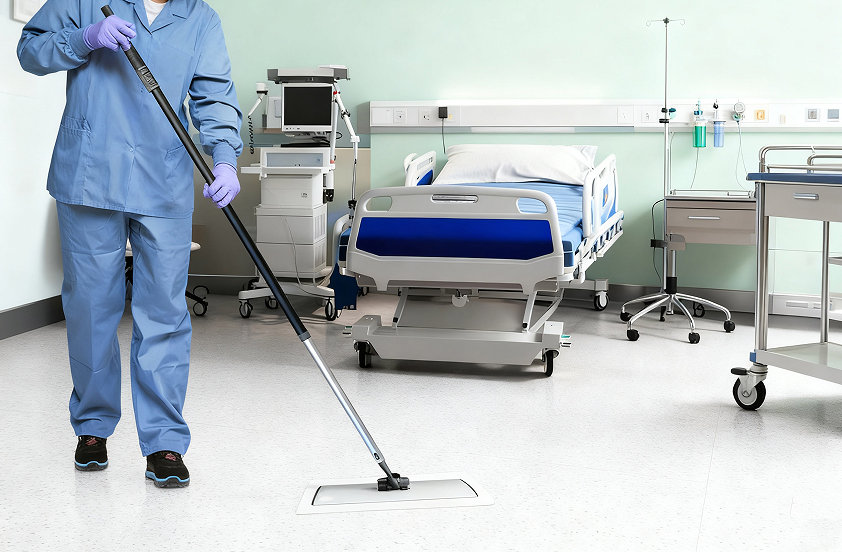
How Medical Disposable Mops Reduce Pathogen Transmission on Clinical Floors
Floor Surfaces as Persistent Reservoirs for HAIs: The Contamination Challenge
Hospital floors are actually pretty bad at what they do when it comes to germs. Research shows around 40% of rooms have floors contaminated with stuff like MRSA and C diff according to AJIC findings from last year. The usual way hospitals clean these floors just spreads the mess around instead of getting rid of it properly because the mop fibers don't hold onto dirt well enough and laundry practices aren't always reliable either. When patients catch infections from their surroundings, hospitals end up paying through the nose for each incident. We're talking about costs exceeding seven hundred forty thousand dollars per outbreak as reported by Ponemon Institute in 2023. This clearly points to an immediate requirement for better cleaning methods that stop germs from spreading throughout facilities rather than making things worse by moving them from one place to another.
Microfiber Mechanism: Enhanced Capture, Retention, and Inactivation of MRSA and C. difficile Spores
Disposable medical mops made from microfiber work differently than regular cotton ones. They actually grab onto germs and lock them away using static electricity and tiny fibers that soak up liquids. Cotton mops just spread stuff around when they clean, but these microfiber mops have special split fibers that can remove almost all bacteria according to studies done at UC schools. What makes this really important is how well they tackle tough C. diff spores, those stubborn little bugs that survive normal washing processes. Since these mops are meant for one time only, whatever gets caught in them stays trapped until disposal. No need to worry about leftover bacteria building up over time like happens with mop heads that get reused multiple times.
Eliminating Cross-Contamination Through Single-Use Design
Biofilm Risk and Zone-to-Zone Transfer in Reusable Mop Systems
The problem with reusable mop systems is that they tend to harbor infections because of biofilms growing in the fibers and buckets. Germs such as C. difficile spores get stuck inside those tiny microfiber strands and survive even after regular washing cycles. What happens next? Staff members drag these dirty mops from one area to another, say from an isolation room right into general patient spaces, carrying around all sorts of drug resistant bugs along the way. According to a recent study done last year, almost two thirds of mops labeled as clean actually had live pathogens on them. And things get worse when someone goes to wring out the mop. The bacteria protected by biofilms become airborne then, spreading everywhere beyond just what's on the floors. This has been linked directly to hospital acquired infection outbreaks in wards where patients are already at risk.
Why Medical Disposable Mops Break the Chain of Environmental Transmission
Disposable mops cut down on reprocessing problems because they get thrown away after cleaning each area. No need for washing or storing them means there's no chance for biofilms to form on the mop heads. The disinfectant comes already soaked in the mop itself, so it stays effective throughout use. When using traditional mops, leftover organic material from previous cleanings can actually cancel out the cleaning power over time. With disposables, everything stays contained in that single unit until disposal. Hospitals that switched to these systems have seen around 40 percent drop in cases where germs spread through the environment. This matches up pretty well with what the Centers for Disease Control recommends when dealing with dangerous pathogens like C. diff or MRSA.
Operational and Infection Control Advantages Over Reusable Mopping Systems
Laundering Compliance Gaps: Evidence from AJIC 2023 Clinical Survey Data
The problem with reusable mops comes down to how they're cleaned. According to a recent study published in AJIC in 2023, out of 200 hospitals surveyed, nearly seven out of ten weren't hitting the right temperature during cleaning cycles as recommended by CDC guidelines. That means dangerous C. difficile spores can actually survive the washing process. And it gets worse: almost 60% of these facilities kept using their mop heads way past the point where they should have been replaced after around 50 washes. When microfibers break down from overuse, they simply don't pick up dirt as well anymore, sometimes losing up to three quarters of their cleaning power. All this creates ongoing problems with hospital acquired infections, making all those strict cleaning rules less effective than they need to be.
Measurable ROI: Labor Efficiency, Disinfectant Consistency, and Audit Readiness
Medical disposable mops deliver quantifiable operational benefits:
- Labor Reduction: Eliminating laundering saves 45 minutes per FTE daily (AJIC, 2023), redirecting over 300 annual hours to direct patient care
- Chemical Precision: Pre-saturated disinfectant systems maintain correct dilution ratios, increasing pathogen kill rates by 30% versus manual mixing
- Compliance Transparency: Single-use tracking simplifies audit documentation, with 92% of facilities reporting improved Joint Commission readiness
The system reduces cross-contamination risks while cutting operational costs by $18 per patient day, according to recent healthcare economic analyses.
Integrating Medical Disposable Mops into Evidence-Based Environmental Cleaning Protocols
Hospitals get better at stopping infections when they start using medical disposable mops as part of their regular cleaning routines. These practices line up with what the CDC recommends about disinfecting surfaces while also getting rid of problems that come up with reusable systems, like clothes not being washed properly or chemicals mixed wrong. Recent studies show healthcare settings saw about a third fewer cases where pathogens moved from floors to hands after switching to these one-time use mops. Another big plus is that the mops come already soaked in disinfectant, so there's no need for staff to measure anything out themselves, which means more reliable results against microbes every time.
Implementing these protocols involves several important stages. The first step is identifying areas where infection risks are highest, typically intensive care units and operating rooms, for the initial phase of implementation. Next comes training the cleaning staff properly in what's known as the one room one mop approach. Finally, we need to make sure that all mop usage gets recorded in our digital tracking system for compliance purposes. When hospitals follow this process consistently, they end up with better records for audits and significantly fewer problems with biofilms building up on surfaces. Studies show facilities cutting down these stubborn bacterial growths by about 40 percent over time. What used to be potential breeding grounds for pathogens become much safer environments instead.
Table of Contents
-
How Medical Disposable Mops Reduce Pathogen Transmission on Clinical Floors
- Floor Surfaces as Persistent Reservoirs for HAIs: The Contamination Challenge
- Microfiber Mechanism: Enhanced Capture, Retention, and Inactivation of MRSA and C. difficile Spores
- Eliminating Cross-Contamination Through Single-Use Design
- Operational and Infection Control Advantages Over Reusable Mopping Systems
- Integrating Medical Disposable Mops into Evidence-Based Environmental Cleaning Protocols