 EN
EN

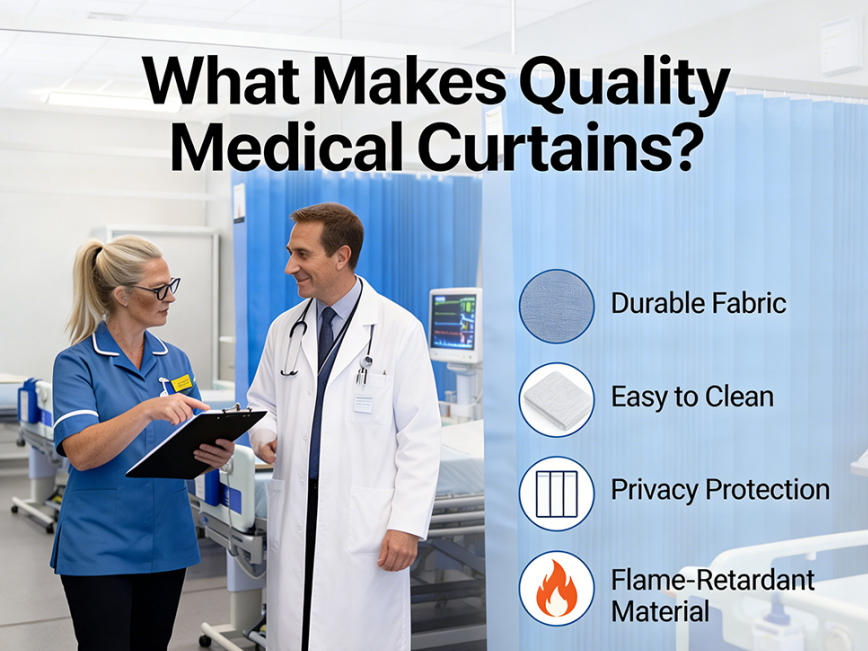
Fire-Retardant Compliance: Meeting NFPA 701 and Global Safety Standards
NFPA 701, BS 5867, and International Certification Requirements for Medical Curtain Fabric
Medical curtains must pass rigorous fire-retardant testing to meet global safety standards. Key certifications include:
- NFPA 701 (Method 1/2): Measures flame spread and after-flame duration (<2 seconds) for single- and multi-layer fabrics
- BS 5867 (UK/EU): Classifies flame resistance for curtains in healthcare settings
- California Title 19: Mandates enhanced ignition resistance for medical facilities
Third-party validation is non-negotiable—certificates must confirm compliance before installation. Reputable manufacturers provide test reports traceable to accredited labs like UL or Intertek, aligning with NFPA’s requirement that flame resistance be “inherent or durable,” not topical or temporary.
Why Fire Safety Failure in Medical Curtains Poses Unacceptable Risk in Healthcare Settings
Medical curtains that don't meet fire safety standards can actually make fires worse in places where there's lots of oxygen, such as intensive care units and operating theaters. These flammable materials catch fire quickly, start putting out poisonous smoke almost immediately after ignition, and block paths people need to escape from the building. This puts both patients who cannot move around easily and hospital staff at serious risk. According to research published by the Ponemon Institute last year, each time a fire breaks out in a healthcare setting, facilities typically face costs around $740,000. Most of these expenses come from moving patients to safer areas, shutting down operations temporarily, and dealing with fines from regulators. The good news? Fire resistant curtains that have proper certification cut down how fast flames spread by roughly 85% when compared with regular fabric. That makes all the difference for survival rates right at the beginning stages of a fire emergency.
Antimicrobial Efficacy: Critical Defense Against Healthcare-Associated Infections
Real-World Protection Against MRSA, VRE, and Other HAIs Linked to Medical Curtain Surfaces
HAIs continue to be one of the biggest sources of avoidable patient harm in hospitals today. The problem gets worse because dangerous germs such as MRSA and VRE can stick around on frequently touched areas for several days straight. Take privacy curtains for instance they get handled constantly by doctors, nurses, patients themselves, even family members visiting loved ones. These curtains basically become hiding spots for bacteria, spreading infection risks from room to room throughout hospital wings. Some newer antimicrobial curtains now incorporate ingredients like silver ions or zinc pyrithione approved by the EPA. These substances actually break down bacterial cell walls and stop them from multiplying right at the fabric level. Traditional cleaning methods just don't cut it anymore since staff might miss spots during busy shifts and surfaces get dirty again almost immediately after wiping. That's why these special fabrics offer ongoing protection without needing constant attention. For critically ill patients in intensive care units or those under strict isolation protocols, this kind of continuous barrier makes all the difference when someone passes by their bed dozens of times each day.
Validation Through ISO 20743 and AATCC 100 Testing — Bridging Lab Results and Clinical Outcomes
When companies make antimicrobial claims, they need proof from actual testing, not just what happens in labs. Two standards stand out worldwide: ISO 20743 looks at how well materials fight bacteria under controlled conditions, whereas AATCC 100 checks for reductions in dangerous germs like staph, klebsiella, and e. coli. These tests aren't just theoretical exercises either. They put products through their paces with things that happen in real life—think dozens of laundry cycles, contact with body fluids, and constant exposure to harmful microbes. Anything that cuts down on germs by at least 99.9% after all this shows it can hold up outside the lab. Medical facilities that install these thoroughly tested antimicrobial curtains often see drops in healthcare associated infections ranging from 18% to 34%. That kind of data makes it clear why hospitals invest so much time verifying these claims before purchasing anything for patient care areas.
Durability and Lifecycle Performance: Wash Resistance, Abrasion Strength, and Total Cost of Ownership
Medical curtains endure relentless wear—from high-temperature industrial laundering and aggressive disinfectants to constant abrasion from equipment, gurneys, and staff movement. Industry data shows curtains failing to withstand 100+ wash cycles typically degrade within 6–12 months, triggering unplanned replacements, workflow interruptions, and increased waste. True durability rests on three interdependent pillars:
- Wash resistance: Fabrics must retain colorfastness, dimensional stability, and tensile strength through repeated exposure to 160°F water, alkaline detergents, and chlorine-based sanitizers—without fiber shedding or antimicrobial leaching.
- Abrasion strength: Per ASTM D4157, top-tier medical curtain fabrics exceed 50,000 double-rub cycles before visible wear—ensuring drape integrity and barrier function in high-traffic zones like emergency departments and step-down units.
- Total Cost of Ownership (TCO): TCO accounts for acquisition price, labor for replacement, laundering costs, disposal fees, and infection-related liabilities over a 5–10 year horizon. Peer-reviewed analyses show durable curtains reduce long-term expenses by 30–40% versus low-cost alternatives replaced biannually—while sustaining uninterrupted infection control and fire safety compliance.
Chemical Compatibility: Maintaining Integrity When Exposed to EPA-Registered Healthcare Disinfectants
Stability Under Repeated Exposure to Bleach, Quats, and Hydrogen Peroxide Solutions
Regular cleaning with EPA approved disinfectants like bleach, quats, and hydrogen peroxide is necessary in hospitals but comes at a cost to certain materials. Fabrics that aren't compatible with these chemicals often get damaged permanently. Bleach breaks down fibers over time, cutting their strength by almost half within just a few months. Quats leave behind greasy residues that make fabric stiff and hard to handle properly. Hydrogen peroxide causes fabrics to turn yellow faster and become brittle. When this happens, the protective qualities of medical textiles degrade. Tiny tears form on surfaces where germs can hide safely. The ANSI/AAMI ST58 standard helps determine if fabrics will hold up through repeated cleaning. This test simulates around 150 disinfection cycles and checks how well materials keep their strength, colors, and ability to fight microbes. Hospital curtains that pass this test and retain over 90% of their original properties last much longer before needing replacement. Facilities reporting such results see about a 22% drop in healthcare associated infections in areas where patients are most vulnerable. This supports what the Joint Commission recommends regarding infection control while also making sense from an operational standpoint for hospital budgets.
FAQ
-
What are the key fire-retardant standards for medical curtains?
Medical curtains must meet NFPA 701, BS 5867, and California Title 19 to be compliant with fire safety standards.
-
Why is antimicrobial efficacy important in healthcare settings?
Antimicrobial efficacy is crucial to combat healthcare-associated infections (HAIs) that arise from germs on surfaces like curtains, which require continuous protection.
-
How can durability affect the total cost of ownership in medical curtains?
Durability in medical curtains extends their lifecycle, reducing frequent replacements and overall costs by up to 40%.
-
What are the primary chemicals that affect medical curtain materials?
Common EPA-registered disinfectants, including bleach, quats, and hydrogen peroxide, can deteriorate medical curtain materials if they aren't compatible.
Table of Contents
- Fire-Retardant Compliance: Meeting NFPA 701 and Global Safety Standards
- Antimicrobial Efficacy: Critical Defense Against Healthcare-Associated Infections
- Durability and Lifecycle Performance: Wash Resistance, Abrasion Strength, and Total Cost of Ownership
- Chemical Compatibility: Maintaining Integrity When Exposed to EPA-Registered Healthcare Disinfectants